
There is no single best floor for a Hong Kong home, only the right floor for the room, the climate and your building's noise rules. For most flats today the practical shortlist is tiles, SPC stone-plastic (石塑地板), vinyl (膠地板), engineered wood (複合地板) and, in wet rooms, a seamless finish (無縫地板). Solid wood (實木地板) is the warmest underfoot but the fussiest in our humidity. This guide walks through each type in plain language: what it is, where it shines, the real downsides including the much-searched SPC drawbacks, how vinyl and stone-plastic actually differ, and which floors need waxing and which never should. By the end you should know exactly what to put underfoot in each room.
The flooring types in a Hong Kong home
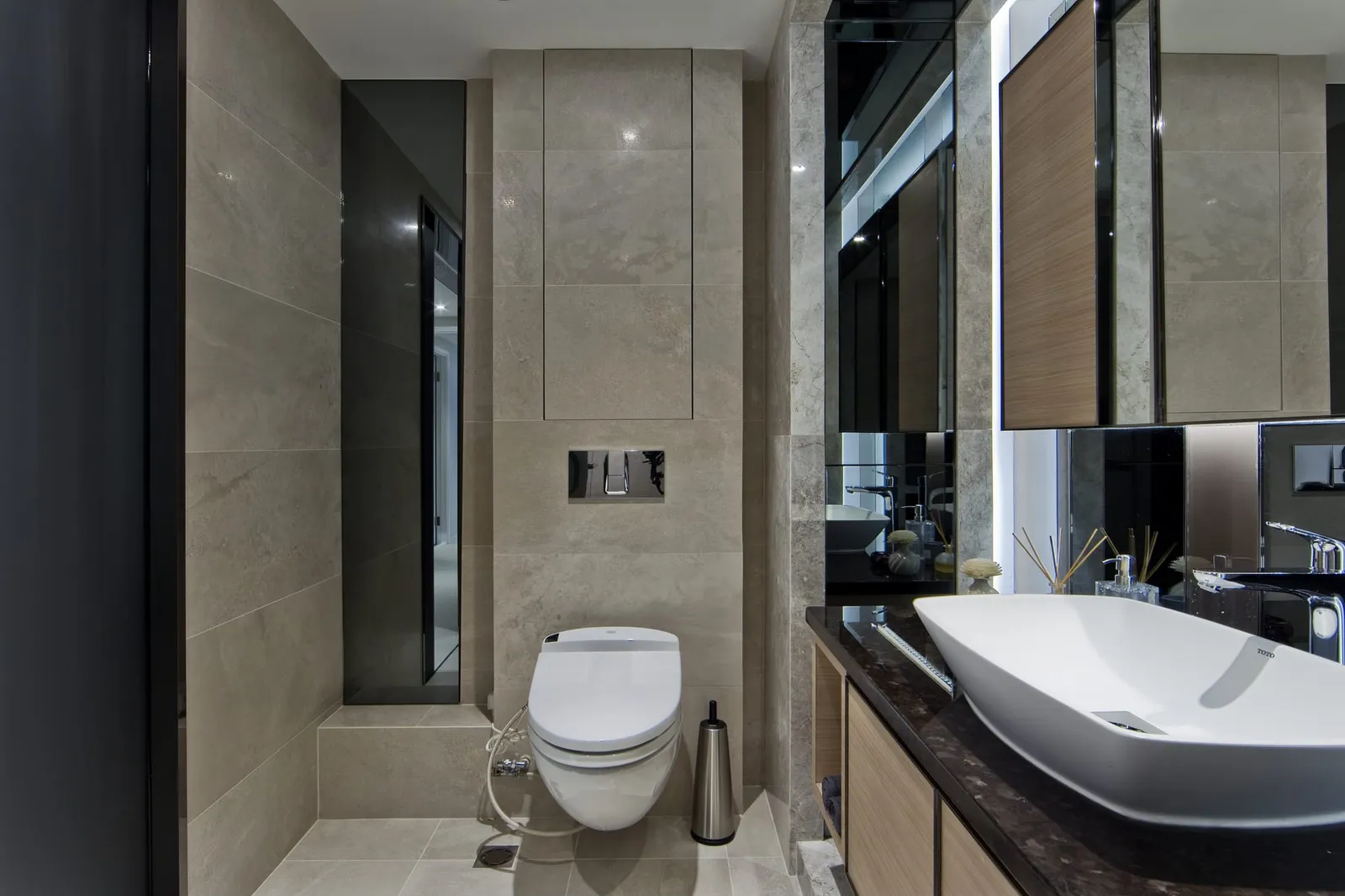
Start by mapping the field. Tiles are hard, waterproof and cool underfoot, the long-standing default for kitchens and bathrooms. SPC stone-plastic (石塑地板) is a rigid click-lock plank with a waterproof core, now the most popular choice for living areas and bedrooms. Vinyl (膠地板) is the wider, softer family that SPC grew out of, from luxury vinyl planks to sheet vinyl. Wood splits into solid (實木地板), engineered (實木複合) and laminate (強化複合), which look similar but behave very differently.
Then there is the seamless floor (無縫地板), a poured or troweled finish such as micro-cement or resin with no joints at all. None of these is best in the abstract. The right answer depends on the room, how wet and busy it is, our humidity, your ceiling height, and whether your estate sets impact-noise rules. The sections below give you the trade-offs so you can match floor to room.
SPC stone-plastic flooring (石塑地板): why it took over
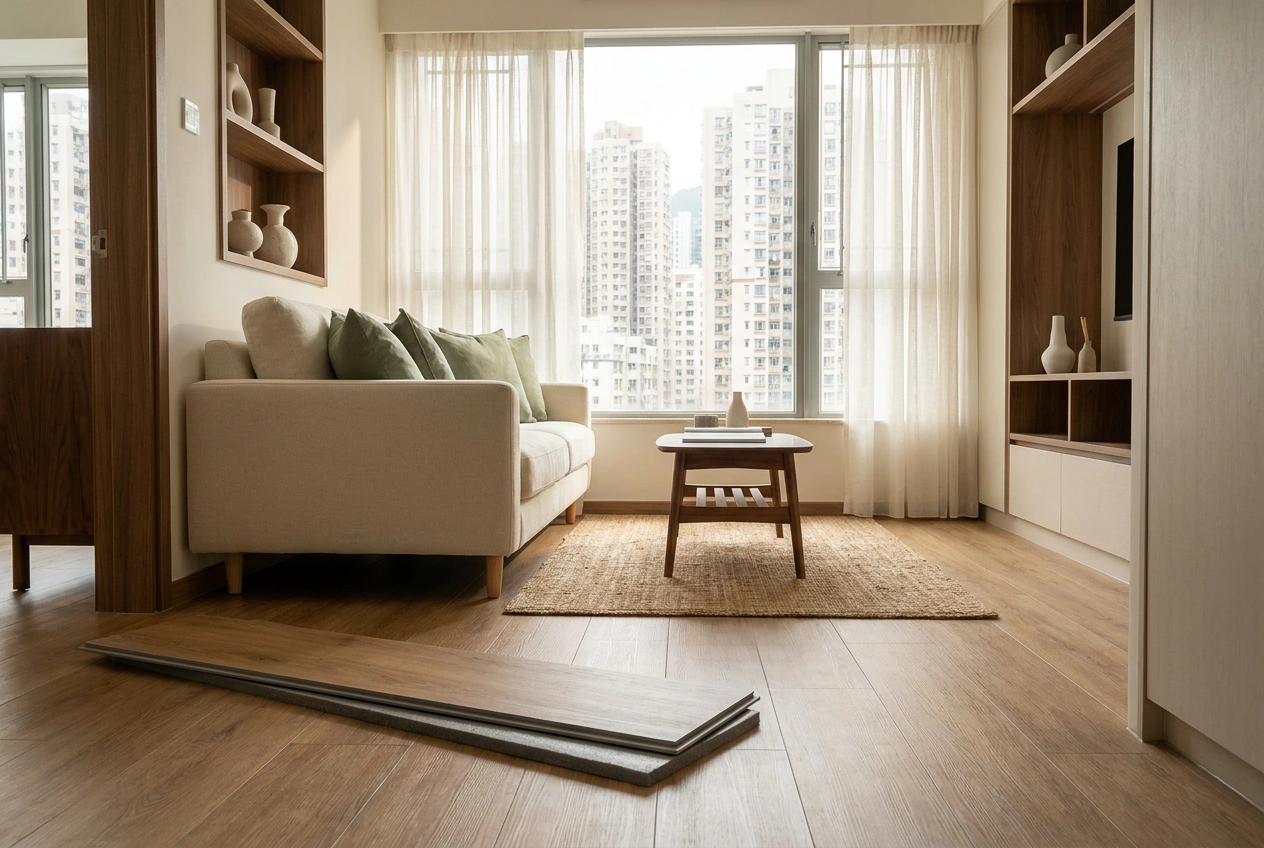
SPC stands for stone plastic composite: a rigid core of limestone powder and PVC, topped by a printed decor layer and a clear wear layer, and clicked together as a floating floor with an underlay often pre-attached. It is the floor most Hong Kong renovators now reach for, and the reasons are practical. The core is waterproof, so a spill or a mopping will not swell it the way it can swell a wood-based board.
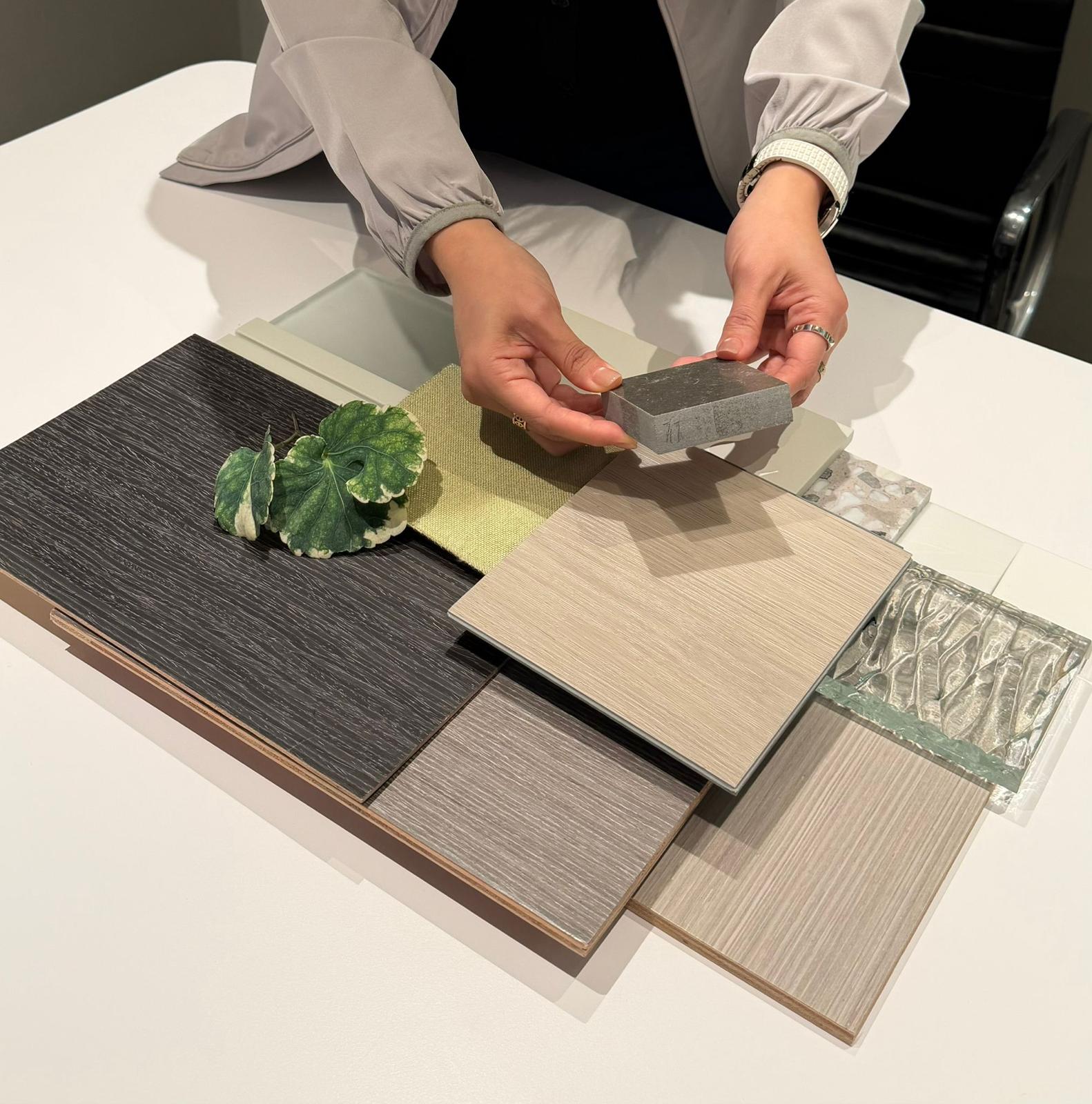
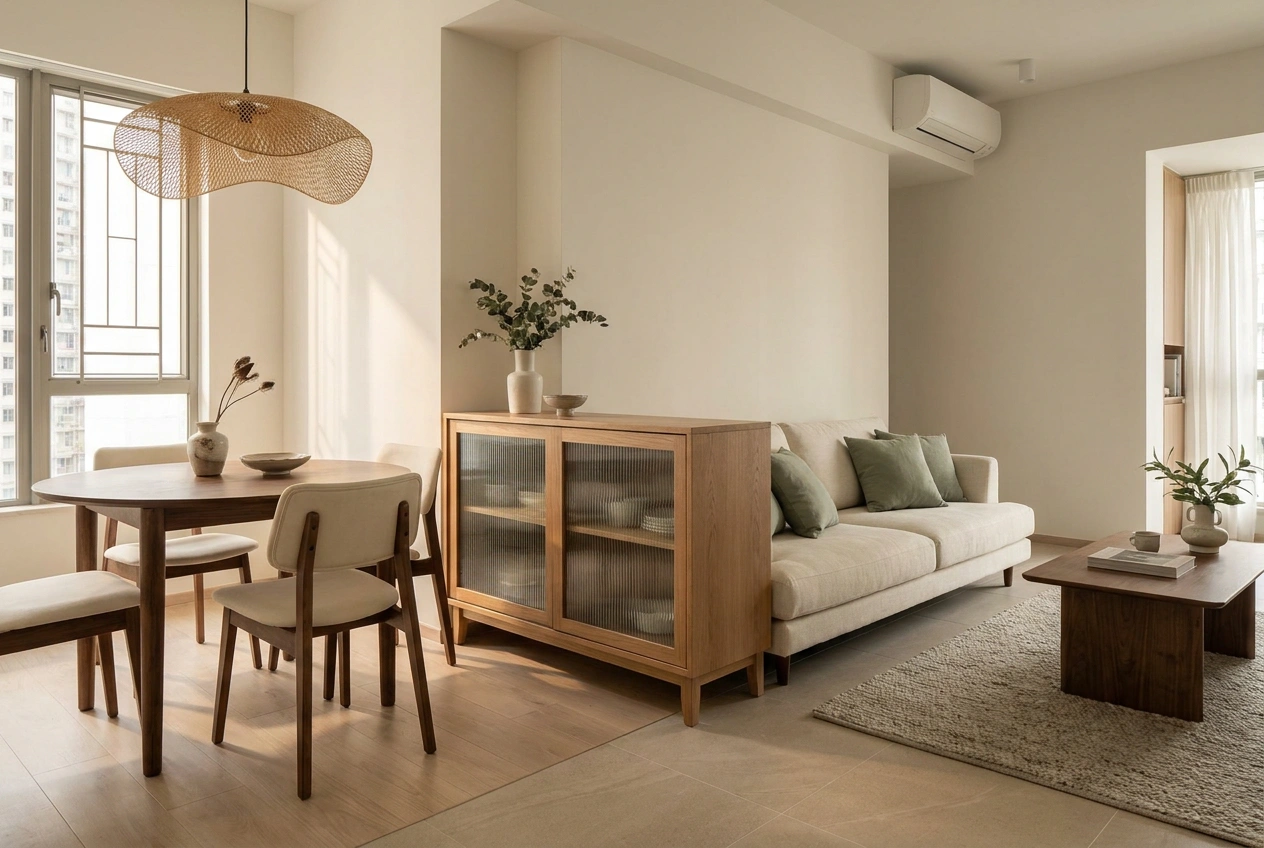
It is also hard-wearing and dent-resistant, dimensionally stable in our heat, and fast to lay, often straight over an existing flat tile floor without wet works. The printed layer mimics wood or stone convincingly, so you get a timber look with none of timber's fear of water. For a busy family flat that wants a wood appearance without the upkeep, SPC is a sensible default, which is exactly why it has taken over the mid-market.
The downsides of SPC (石塑地板缺點)
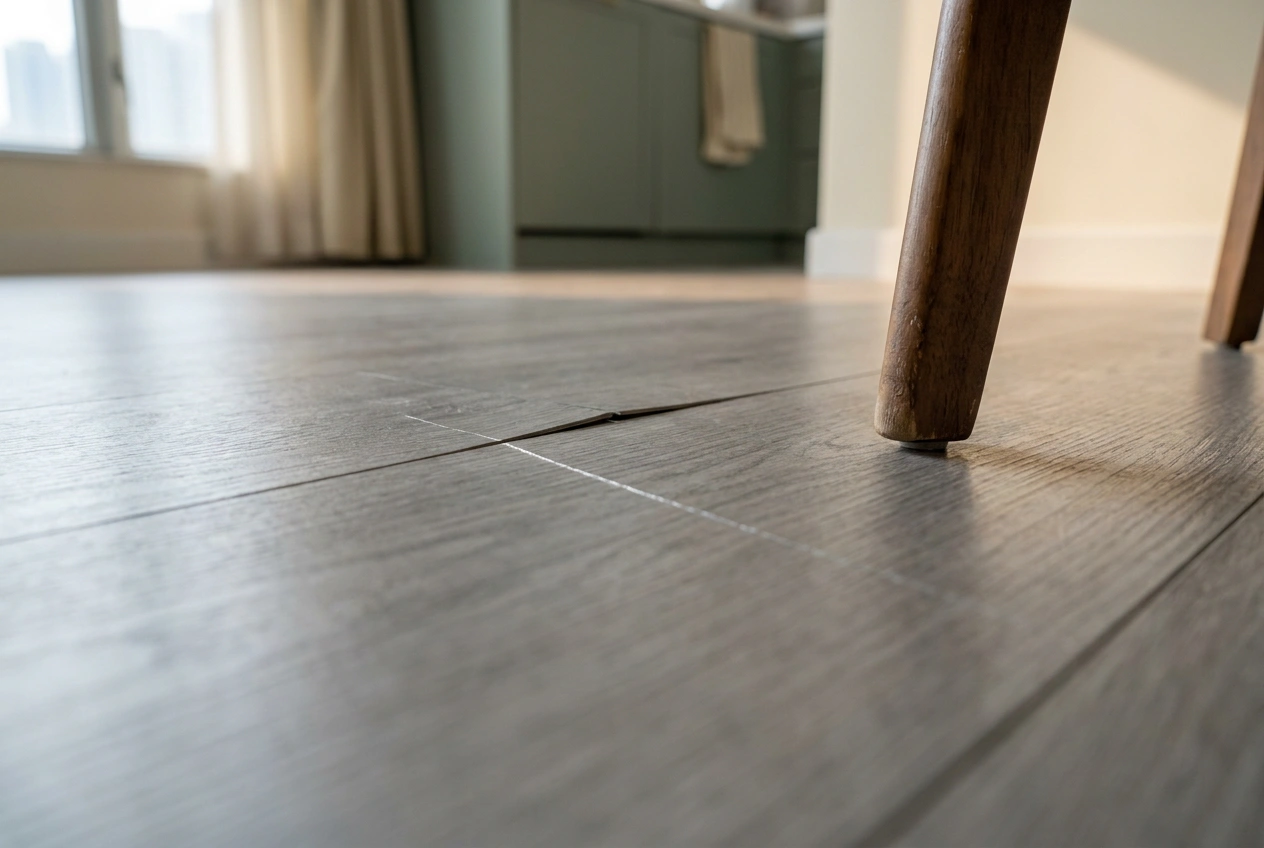
SPC is popular, not perfect, and the drawbacks are worth knowing before you commit. Because the core is rigid, it feels harder and cooler underfoot than soft vinyl or wood, and a floating SPC floor can sound slightly hollow as you walk. That hollow knock gets worse if the subfloor underneath is not flat, so a rigid plank actually demands a level base; lay it over a bumpy floor and planks can rock or the click joints can lift over time.
The wear layer is everything: a cheap, thin one scratches, scuffs and dulls within a couple of years, and lower-grade product can fade in strong direct sun. SPC is also not refinishable, so a damaged plank is replaced rather than sanded, and being a plastic-based product it never quite has the warmth of real wood. The lesson is not to avoid SPC but to buy a decent wear-layer thickness and to get the subfloor flat first.
SPC versus vinyl (膠地板): what is the difference?
This confuses a lot of people because SPC is technically a type of vinyl. In Hong Kong shorthand, 膠地板 usually means the older, softer vinyls: flexible luxury vinyl planks and tiles, sheet vinyl on the roll, and the thin self-adhesive PVC tiles people stick down themselves. SPC is the newer rigid-core cousin. The real difference is the core: SPC is rigid and clicks together floating, while classic vinyl is flexible and is usually glued down.
That changes how they behave. Flexible vinyl is softer, warmer and quieter underfoot and is cheaper, but because it bends it telegraphs every bump in the subfloor and dents more easily under heavy furniture. Sheet vinyl gives a near-seamless, very water-tight surface that suits a small bathroom or a kitchen. Rigid SPC is more stable, more forgiving of minor subfloor gaps and easier to install as a floating floor. For most dry rooms SPC wins; for a tight wet area, good sheet vinyl still earns its place.
Solid, engineered and laminate wood (實木、複合、強化)
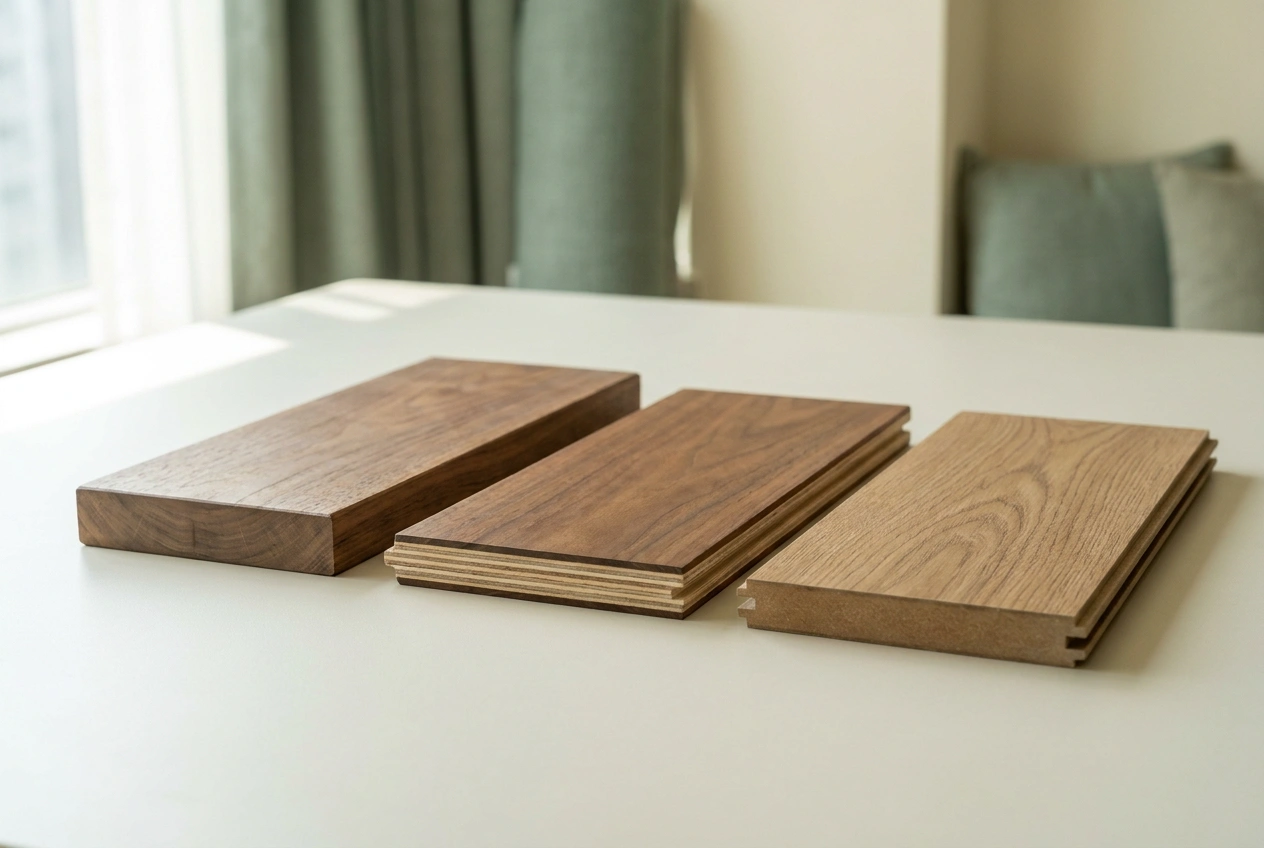
Real-wood floors split into three. Solid wood (實木地板) is a single piece of hardwood: the warmest and most premium, and the only one you can sand and refinish many times. The catch in Hong Kong is humidity. Solid timber moves with the seasons, so it can cup, gap or creak unless the flat's moisture is kept in check, and it rewards an owner who maintains it. Engineered wood (實木複合) bonds a real-wood veneer onto a stable plywood core, so it stays far flatter in damp weather and can still be refinished once or twice. For most Hong Kong homes that want genuine wood, engineered is the sensible middle ground.
Laminate (強化複合地板) is the one to understand clearly, because it is often sold alongside wood but is not wood at all: it is a high-density fibreboard core with a printed photographic decor and a tough overlay. It resists scratches well and is affordable, but the fibreboard core swells if water sits on it, unless you choose a water-resistant grade, so it is less forgiving in a humid flat or a home with pets and spills. Match the wood type to how wet and busy the room is, not just to the look on the sample.
Seamless floors (無縫地板) and micro-cement
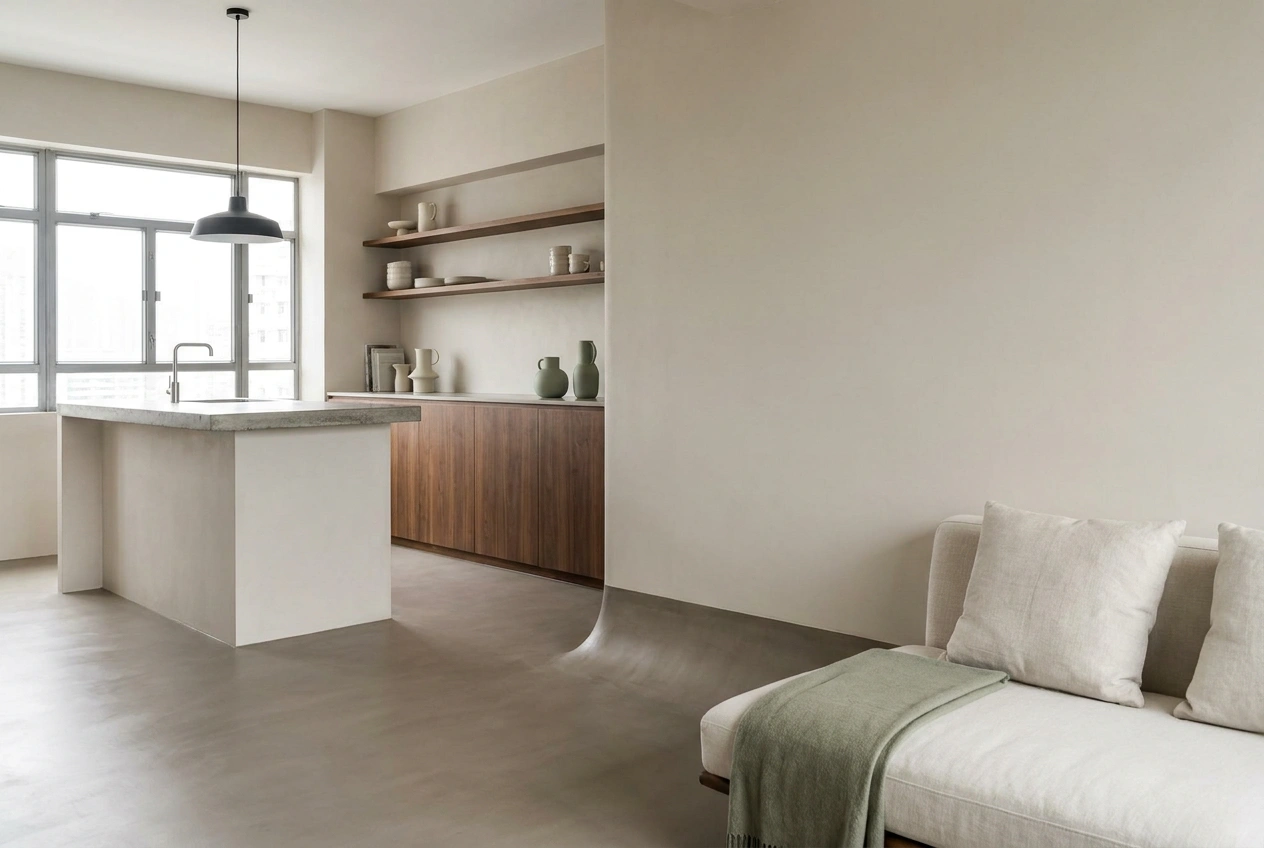
A genuine seamless floor (無縫地板) has no planks and no joints because it is poured or troweled on site as one continuous surface. The common options are micro-cement (微水泥), a thin cement-based skim that can go over existing floors and walls; resin floors such as epoxy or polyurethane; and welded sheet vinyl, where the seams are heat-sealed shut. The appeal is a clean, modern, hygienic look with no grout lines to scrub, which suits an open-plan flat or an industrial-leaning scheme.
The trade-offs are real. A seamless finish lives or dies by the skill of the applicator, micro-cement can develop fine hairline cracks as a building moves, and these floors need correct sealing and occasional resealing to stay water-tight and stain-free. They are hard underfoot and can be slippery if specified too glossy, so a matt or lightly textured seal is wiser in a home. Note too that some shops market wide SPC or sheet vinyl as 無縫: it minimises visible joints but is not the same as a truly jointless poured floor.
Waxing, upkeep and choosing for Hong Kong (地板打蠟)
Floor waxing (地板打蠟) is widely misunderstood. Waxing genuinely helps only certain floors: solid or engineered wood with an oil or wax finish, and some older vinyl, terrazzo and stone. It does the opposite of good on most modern floors. SPC, click vinyl, laminate and tile already carry their own factory wear layer, so wax just builds up into a dull, slippery film that attracts dirt. Lacquered or UV-coated wood should be recoated by a specialist when it wears, not waxed. So before you book a waxing service, check what your floor is finished with.
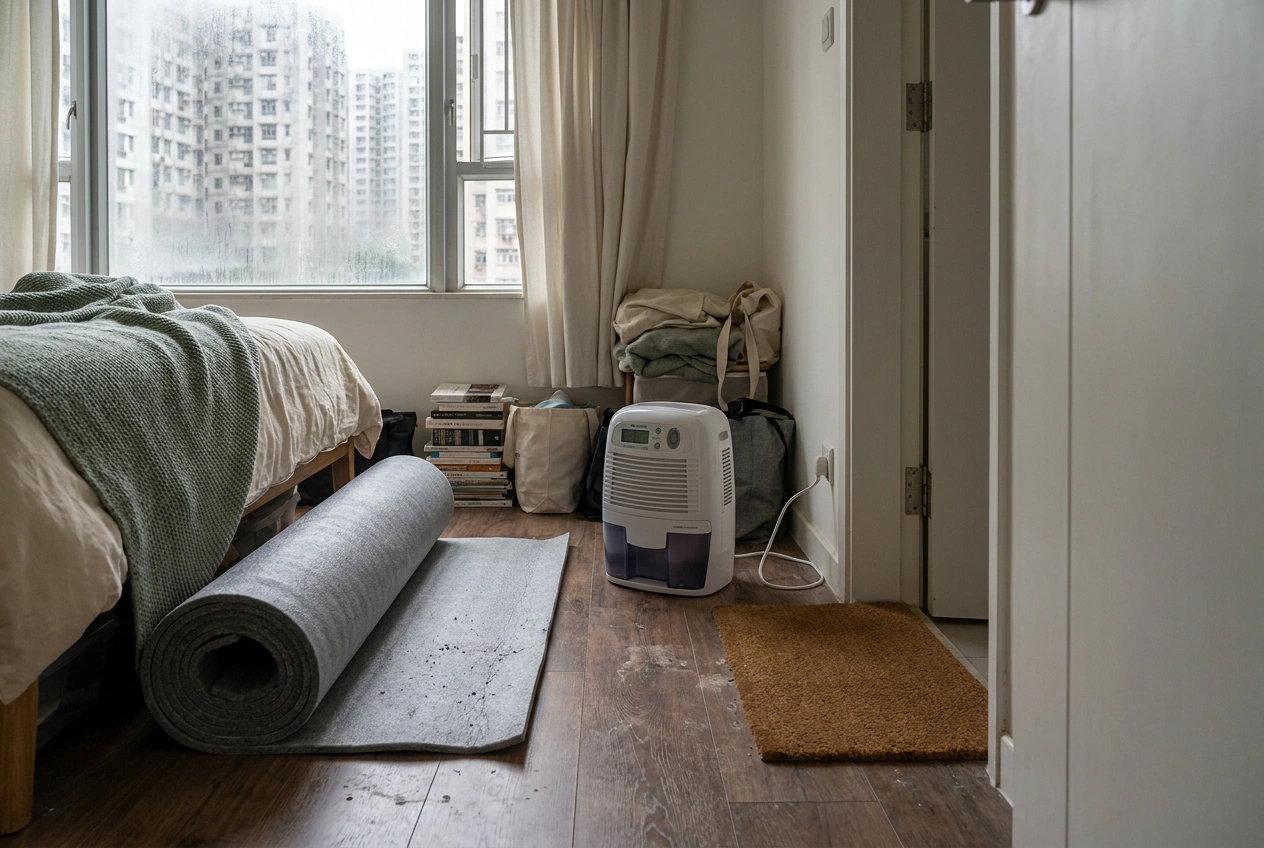
For Hong Kong specifically, let the climate and the building decide. Humidity favours a waterproof core, which is why SPC and tile are so common, and why solid wood needs a controlled, well-ventilated flat. Many estates set impact-noise rules, so a good acoustic underlay under a floating floor is often required, not optional. Raising the floor with thick build-ups also eats into ceiling height, and rigid floors need a flat subfloor to sit quietly. Day to day, keep a dehumidifier running in the wet season, wipe spills promptly, and use mats at the door. Choose for the room and the climate first, and the look second, and the floor will still look right years from now.
Open WeChat, Discover, Scan
Or save the QR and import it from your gallery.