
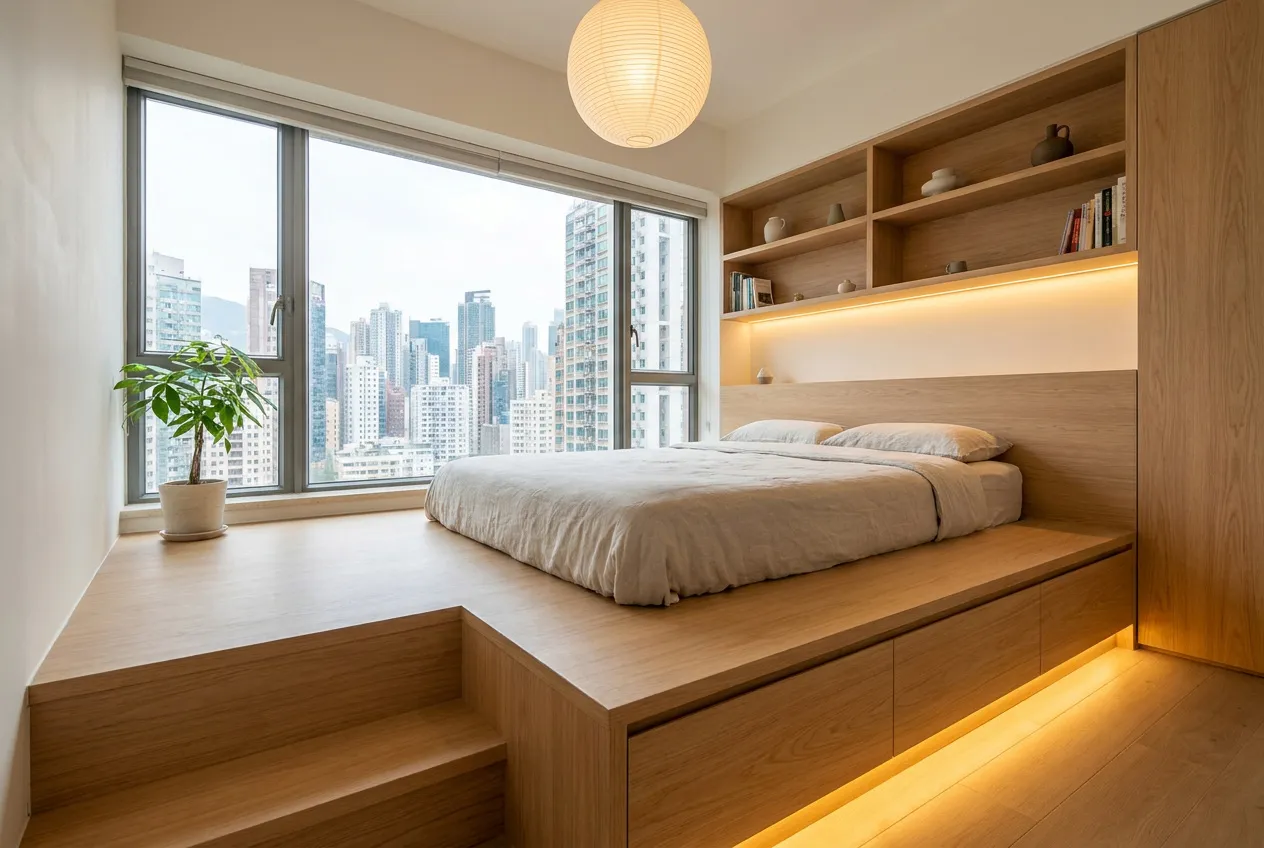
A platform bed (地台床) is one of the best space-savers in a small Hong Kong flat, and also one of the most regretted when it is done badly. The idea is simple: instead of a bed frame on legs, the bed sits on a raised, built-in floor platform that hides storage underneath. Done well, it swallows bedding, luggage and off-season clothes while doubling as seating, a study nook or a step. Done badly, it traps moisture and breeds mould, hides storage you stop bothering to reach, and eats your ceiling height. This guide covers the main types, the real downsides behind the common regrets (地台床缺點), how to ventilate one properly in our humidity, and which flats genuinely suit it.
What is a platform bed (地台床) and the main types
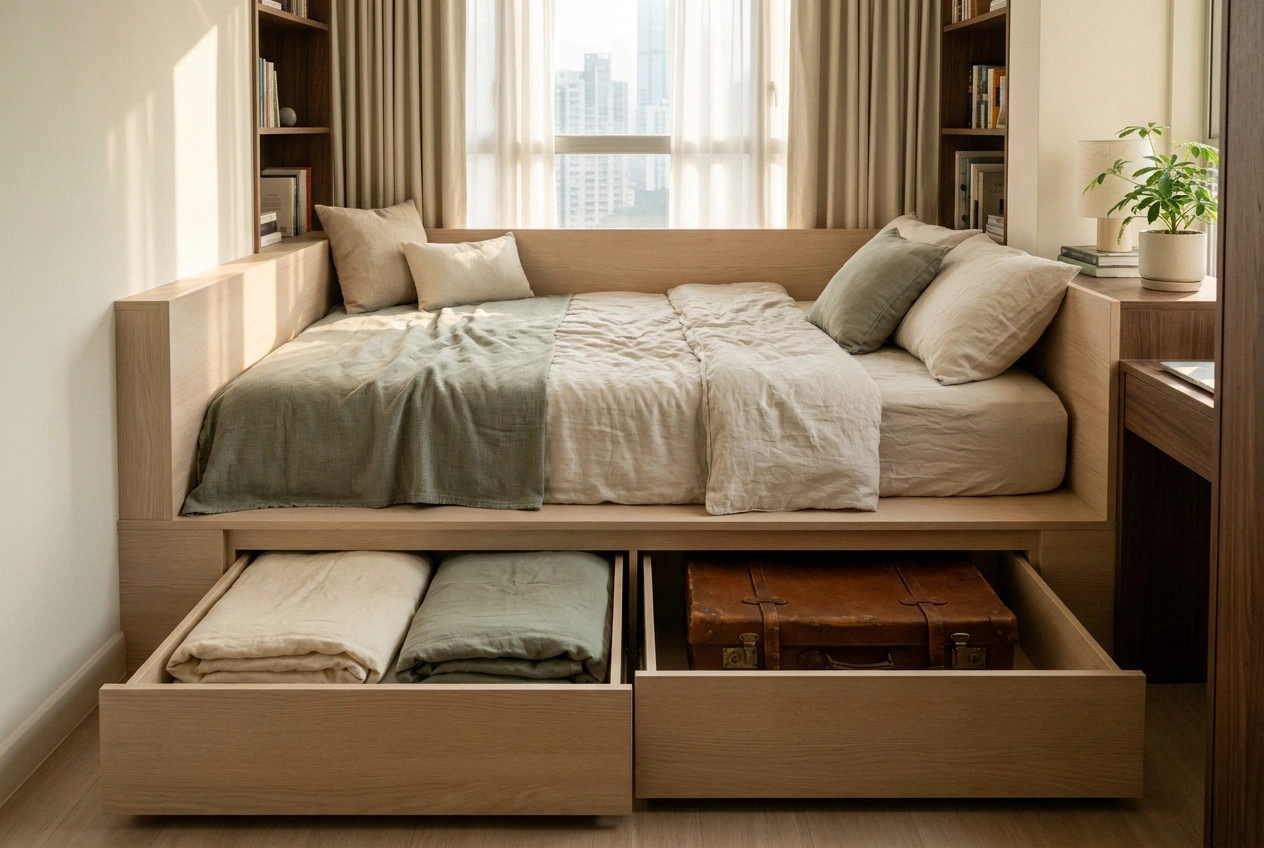
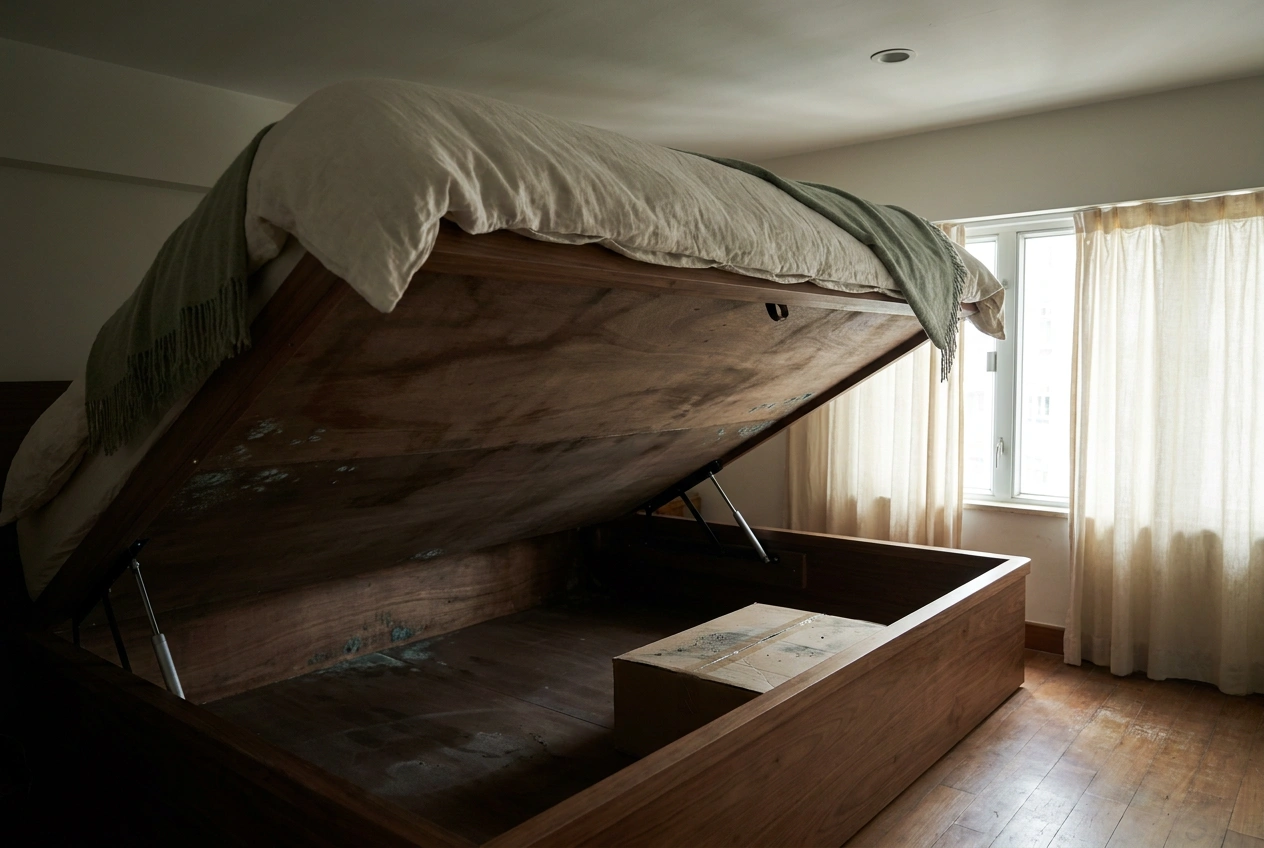
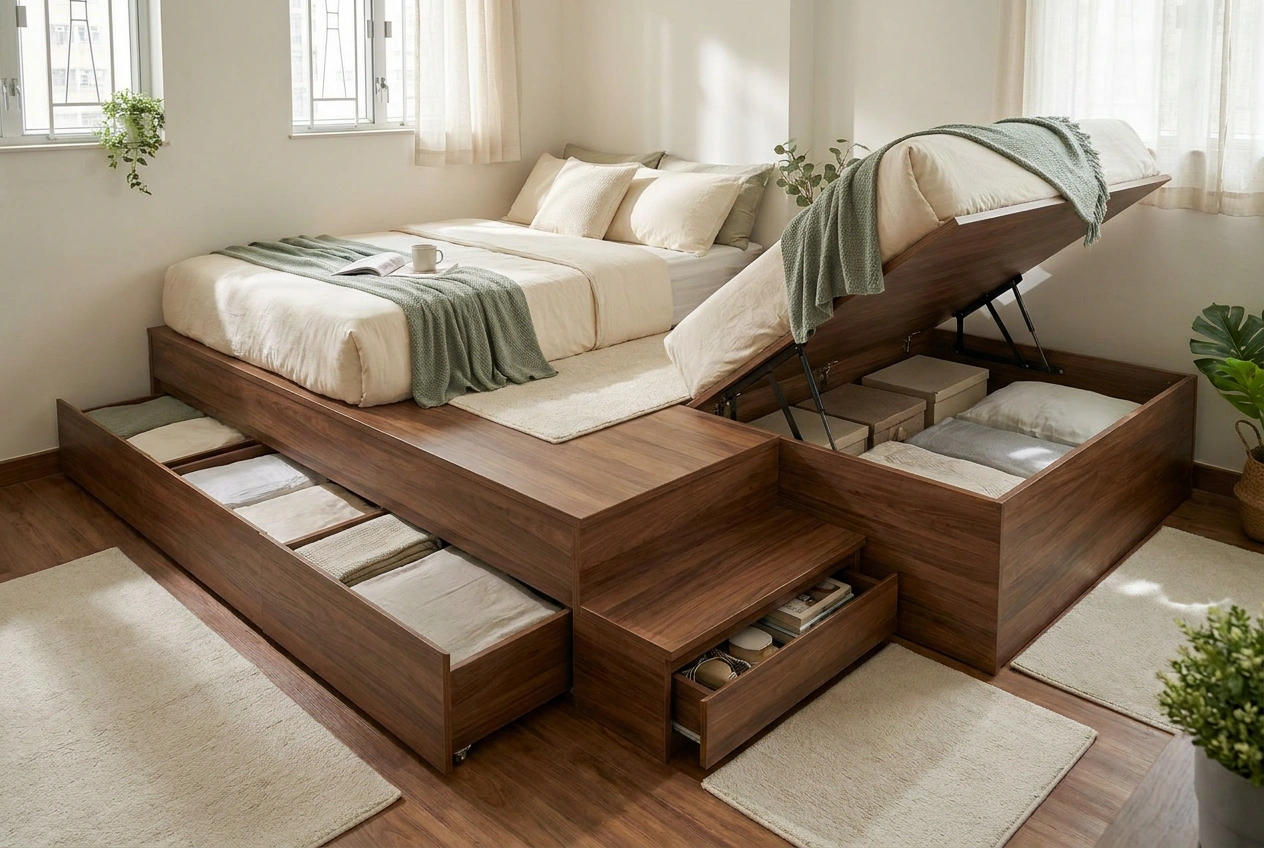
A platform bed is a low, built-in box: a raised floor platform with the mattress resting on top and storage built into the structure below. There are four common forms. A drawer platform (抽屜地台床) puts wide drawers in the sides for easy daily access. A gas-lift platform (油壓揭起式) hinges the whole mattress base upward on gas struts to reveal one deep cavity underneath. A tatami platform (榻榻米地台) is the Japanese-influenced version, often with lift-up floor panels over storage wells.
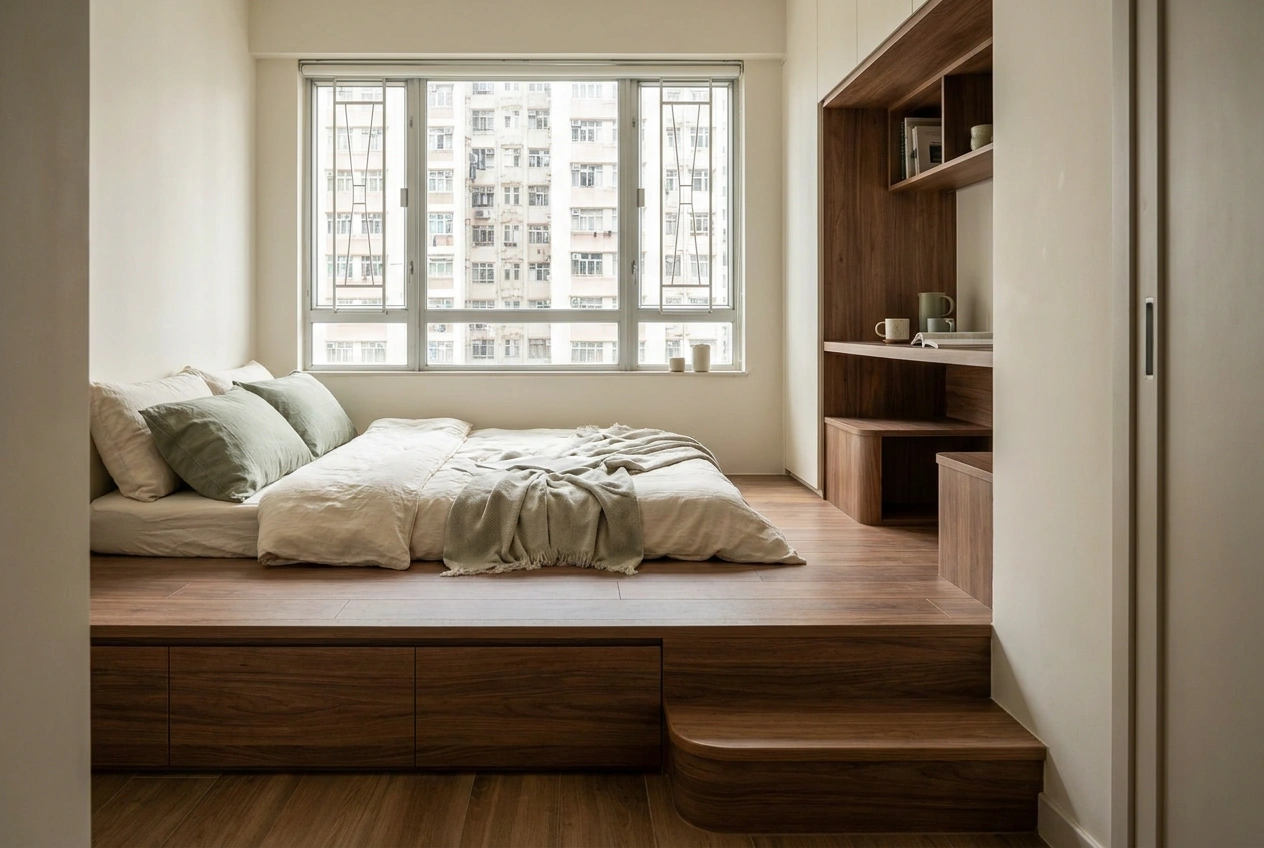
The fourth is a full-room platform (全屋地台), a raised floor across the whole room with several storage compartments that doubles as a sitting and study zone, sometimes called a Japanese-style room. The right type depends on what you need to store, how often you need to reach it, and how much ceiling height you can spare, which is exactly where the trade-offs below come in.
The big win: storage and multifunction
The reason platform beds are everywhere in Hong Kong is space. A flat is short of storage and short of floor, and a platform bed turns the footprint the bed already occupies into a large, hidden store for bedding, suitcases, seasonal clothes and bulky items that have nowhere else to go. Nothing has to stick out into the room the way a separate chest or shelving unit would.
It can also do more than one job. The raised edge becomes casual seating, a side can become a bookshelf, the steps up to a higher platform can themselves be drawers, and a full-room platform can carve a studio into a clear sleeping zone and a living zone without building a single wall. For a compact flat, a studio or a child's room, that two-jobs-in-one quality is the real attraction, not just the looks.
The downsides, and why some people regret it (地台床缺點)
The regrets are consistent and worth hearing before you build. The biggest is damp: a mattress sitting on a closed box, in Hong Kong's humidity, traps body moisture with nowhere to escape, so without proper ventilation the underside of the mattress and the cavity can grow mould and harbour dust mites. The second is storage you stop using: a gas-lift bed means clearing and lifting the whole mattress every time, so the deep cavity quietly becomes a place things go to be forgotten, and side drawers that face a wall cannot open at all.
The rest add up. You cannot sweep or vacuum under a sealed platform, so dust collects inside. The build-up raises the floor and steals ceiling height, which can feel oppressive in an already low flat. It is fixed joinery, so it is hard to change later and you cannot take it with you from a rented flat. And if a pipe leaks beneath it, the sealed cavity hides the damage and makes inspection and repair awkward. None of these is a reason to avoid a platform bed, but each is a reason to design it carefully.
Ventilation and damp: the make-or-break in our humidity
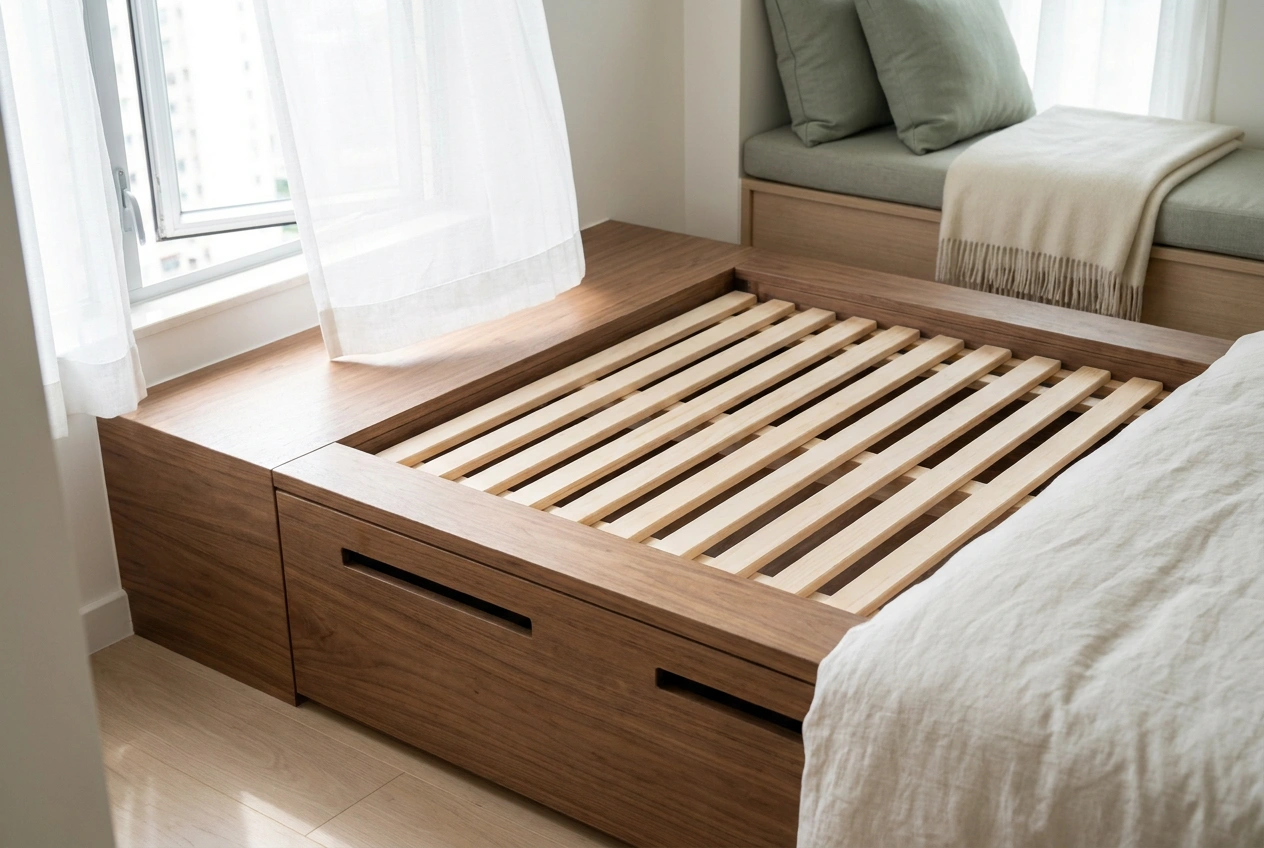
Most platform-bed regret traces back to one thing, trapped moisture, so this is where the design has to be right. The mattress needs to breathe from below. The single most effective move is a slatted base (排骨架) rather than a solid board under the mattress, so air can move and sweat can dry. Beyond that, build discreet vents or breathing gaps into the sides and base of the platform, and never seal the box completely airtight.
A few more habits keep it healthy. Specify a moisture-resistant board for the carcass, include removable or hinged access panels so you can air, inspect and clean the cavity, and run a dehumidifier through the wet season as you would anywhere in a Hong Kong bedroom. Lift and air the mattress now and then, and avoid storing anything damp inside. Get the airflow right and a platform bed stays fresh for years; ignore it and the regret stories all start here.
Drawers, gas-lift or open steps: choosing the storage
How you get at the storage matters more than how much there is, because storage you cannot reach easily is storage you stop using. Side drawers (抽屜) are best for things you want every day, since you simply pull them out, but they only work on sides that face open floor, not a wall, and their depth is limited to the platform height. A gas-lift top (油壓揭起式) gives one big, deep cavity that uses the whole footprint, which is ideal for suitcases and off-season bedding you touch a few times a year, but it is heavy to lift and impractical for daily items.
Many of the best platform beds combine both: everyday drawers down the accessible side, a lift-up section for seldom-used bulk, and perhaps step-drawers where the platform changes height. Plan it around your routine before the carpentry starts: decide which side is open, what you reach daily versus seasonally, and the storage will actually get used rather than forgotten.
Which flats and situations suit a platform bed
A platform bed earns its place in a small flat, a studio, a compact or box bedroom, and a child's room, where the storage and the multifunction matter most, and in a Japanese-style room where the raised floor is the whole point. It is also a strong move when there is simply nowhere else to put bulky, seldom-used items.
It is worth pausing in a few cases. In a low-ceiling flat, raising the floor can make the room feel tight, so keep the platform shallow or reconsider. In a rented flat, remember you cannot take fixed joinery with you. In a very damp, ground-floor or poorly ventilated unit, the moisture risk is higher and the ventilation design has to work harder. And if you need frequent access to heavy things, daily-use drawers beat a lift-up cavity. On the design itself, set the platform at a height that is comfortable to sit on and rise from, add a step for a tall platform, and soften sharp edges in a child's room. Matched to the right flat and detailed for airflow, a platform bed is a space-saver you keep thanking; forced into the wrong one, it becomes the regret people warn about.
Open WeChat, Discover, Scan
Or save the QR and import it from your gallery.