
A small flat renovation in Hong Kong is where design earns its reputation. Whether you have a 150 sq ft studio, a 280 sq ft one-bedroom, or a 400 sq ft home, the challenge is the same: make a tight footprint feel calm, open and genuinely liveable. The secret is not cramming more in; it is planning every centimetre so that storage disappears into the architecture, furniture works twice as hard, and light does the rest. Done well, a small flat can feel more peaceful than a larger one full of clutter. This guide covers space-saving layouts, built-in storage, multifunctional furniture, the role of light and mirrors, and the mistakes that quietly make small flats feel smaller.
Plan the layout around how you actually live
In a small flat, the layout matters more than anything else, because there is no spare space to absorb a mistake. The first job is to be honest about how you live: whether you cook properly or rarely, work from home, host friends, or simply need somewhere restful to land each day.
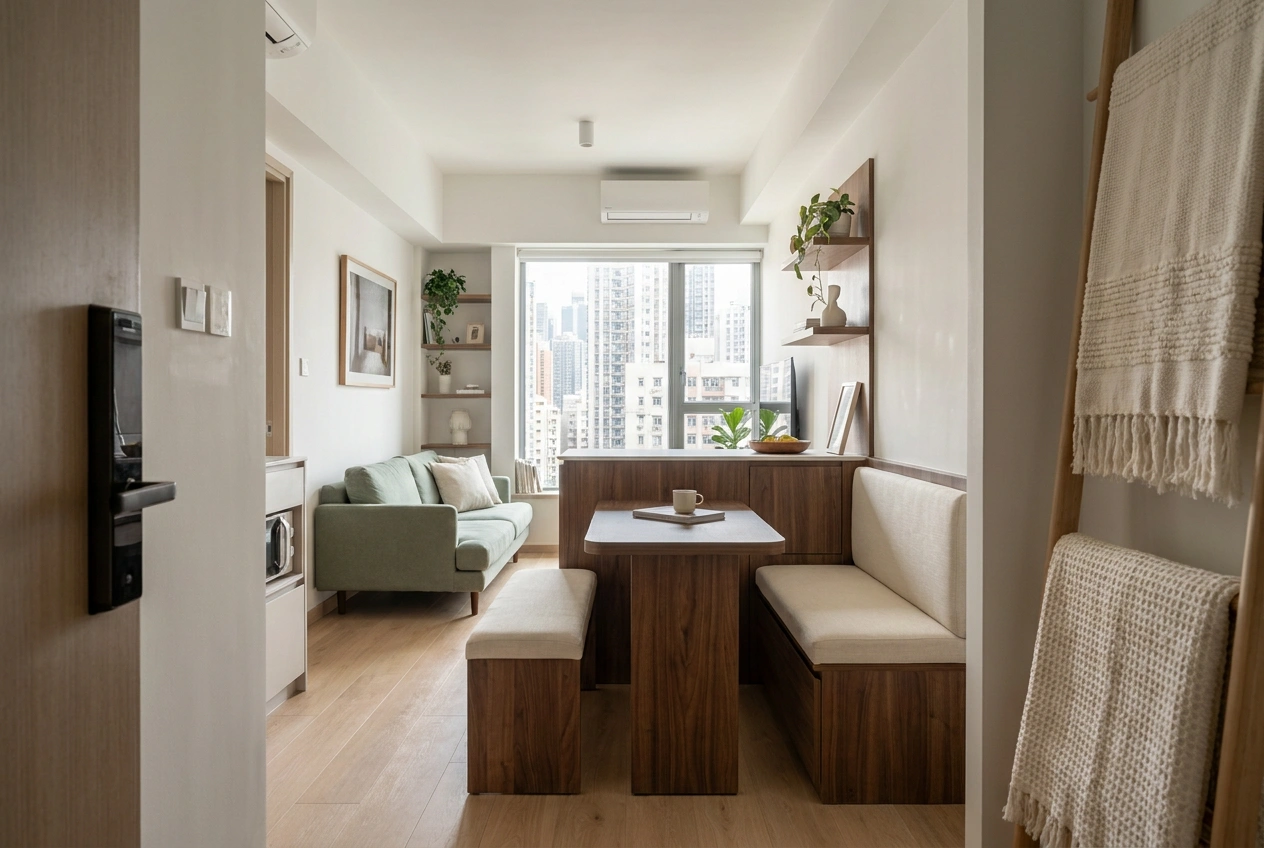
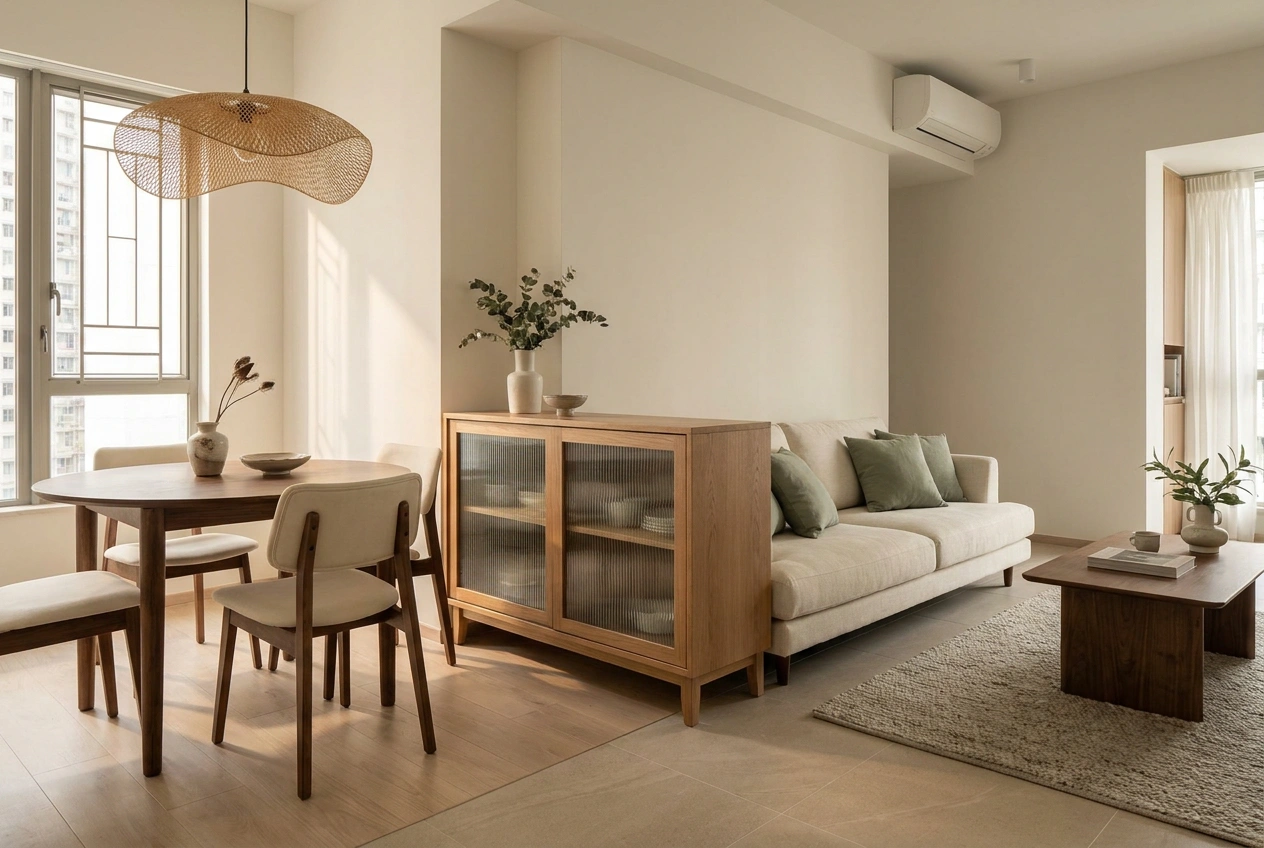
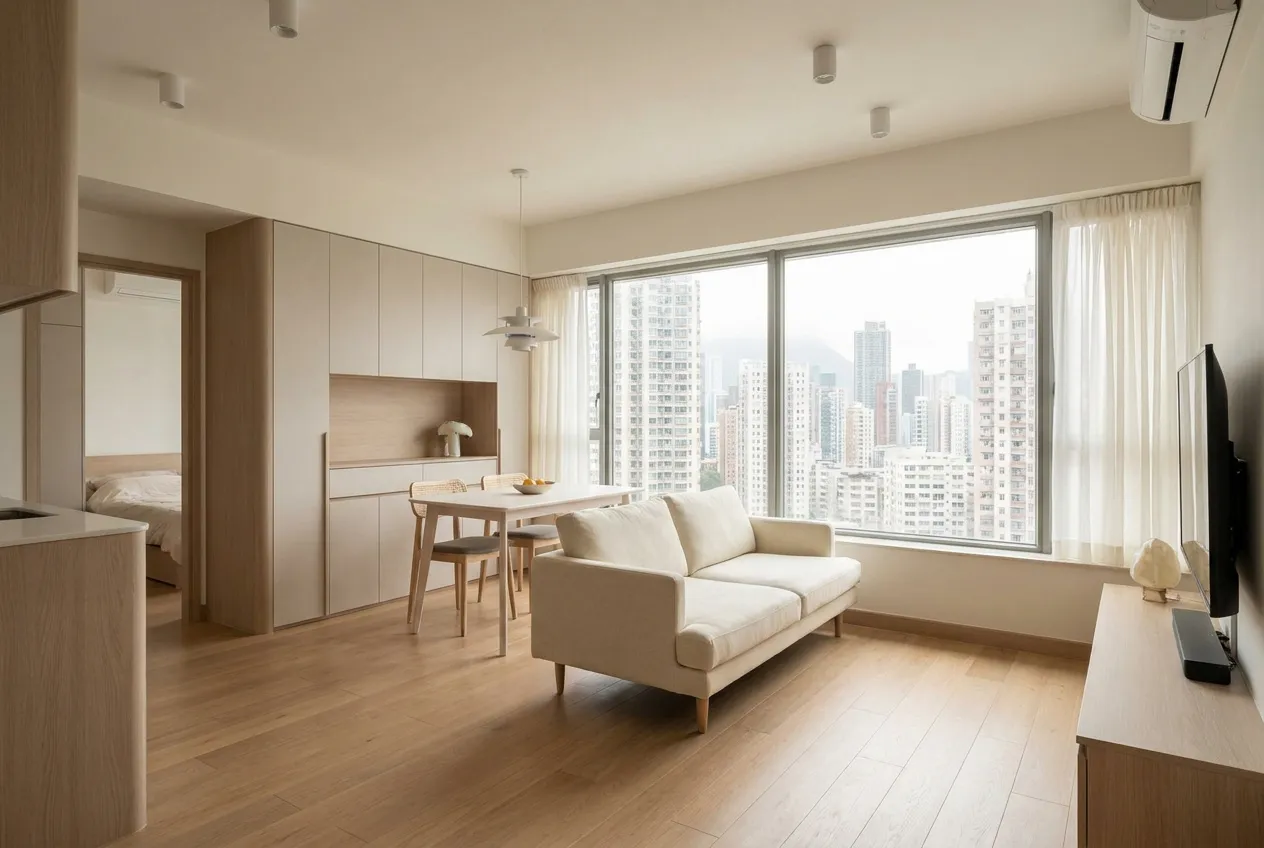
That honesty decides where the square footage goes. A 150 sq ft studio might trade a separate kitchen for an open one to win living space; a 280 sq ft flat might fold the dining function into a kitchen island. The aim is an open, flowing plan with clear sightlines, so the eye travels uninterrupted and the flat feels larger than its number suggests.
Built-in storage is non-negotiable
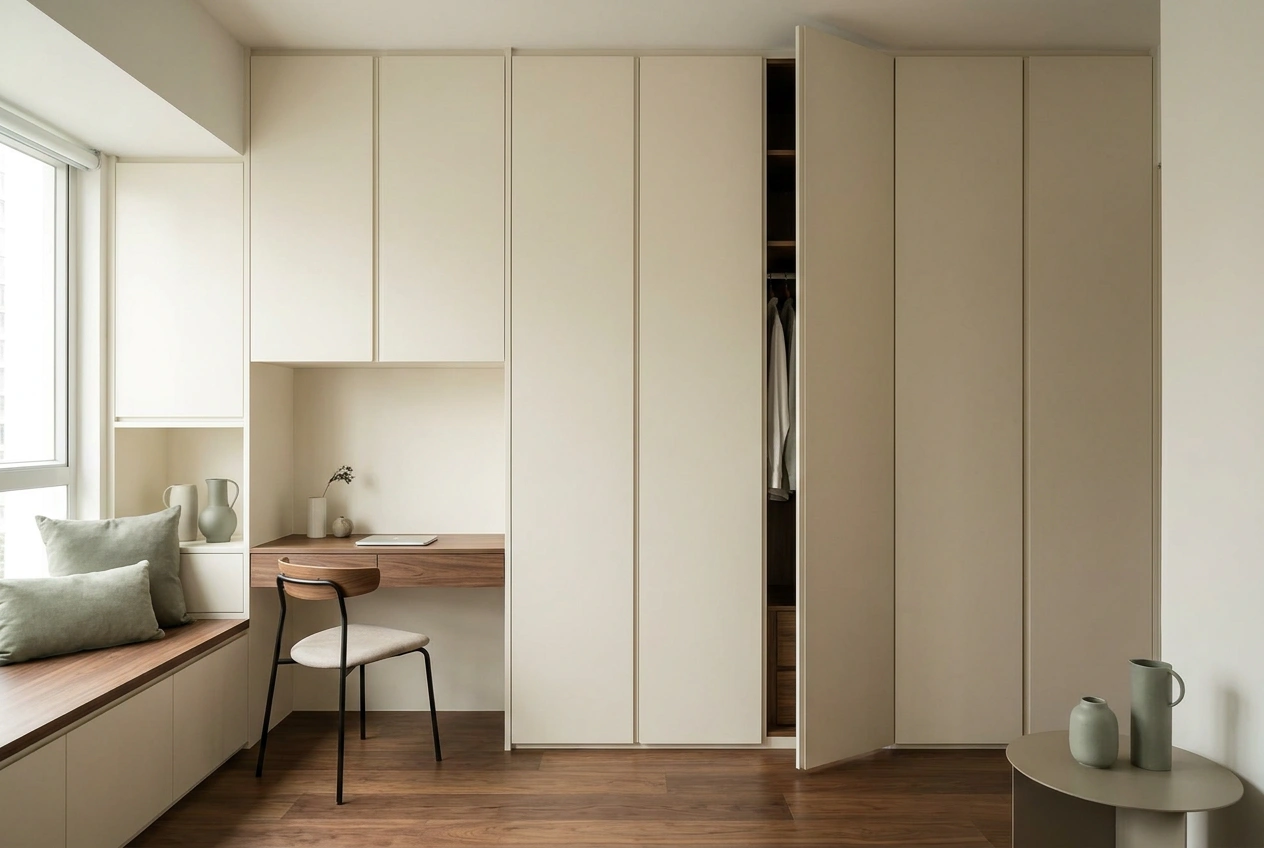
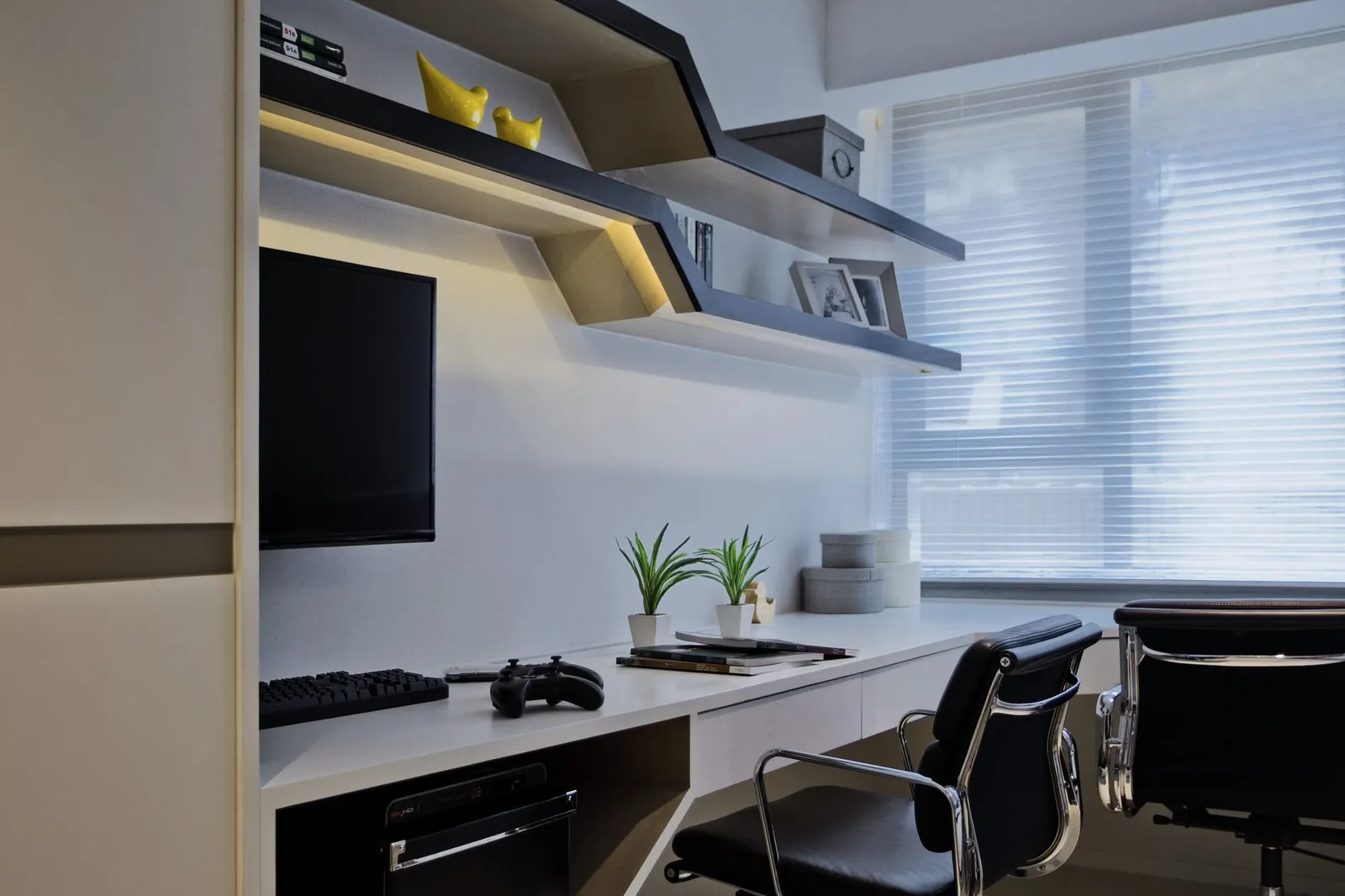
In a flat of 150 to 400 sq ft, storage is the difference between calm and chaos, and it almost always has to be built in. Loose cupboards waste space and look cluttered; made-to-measure cabinetry uses every awkward corner and the full height of the room.
Run storage to the ceiling, tuck it under beds and benches, and let it line the walls so floor space stays clear. Concealed, flush storage that blends into the walls keeps the room visually quiet, which is what makes a small space feel restful. Get the storage right and a tiny flat suddenly has room to breathe; get it wrong and no amount of styling will rescue it.
Furniture that does more than one job
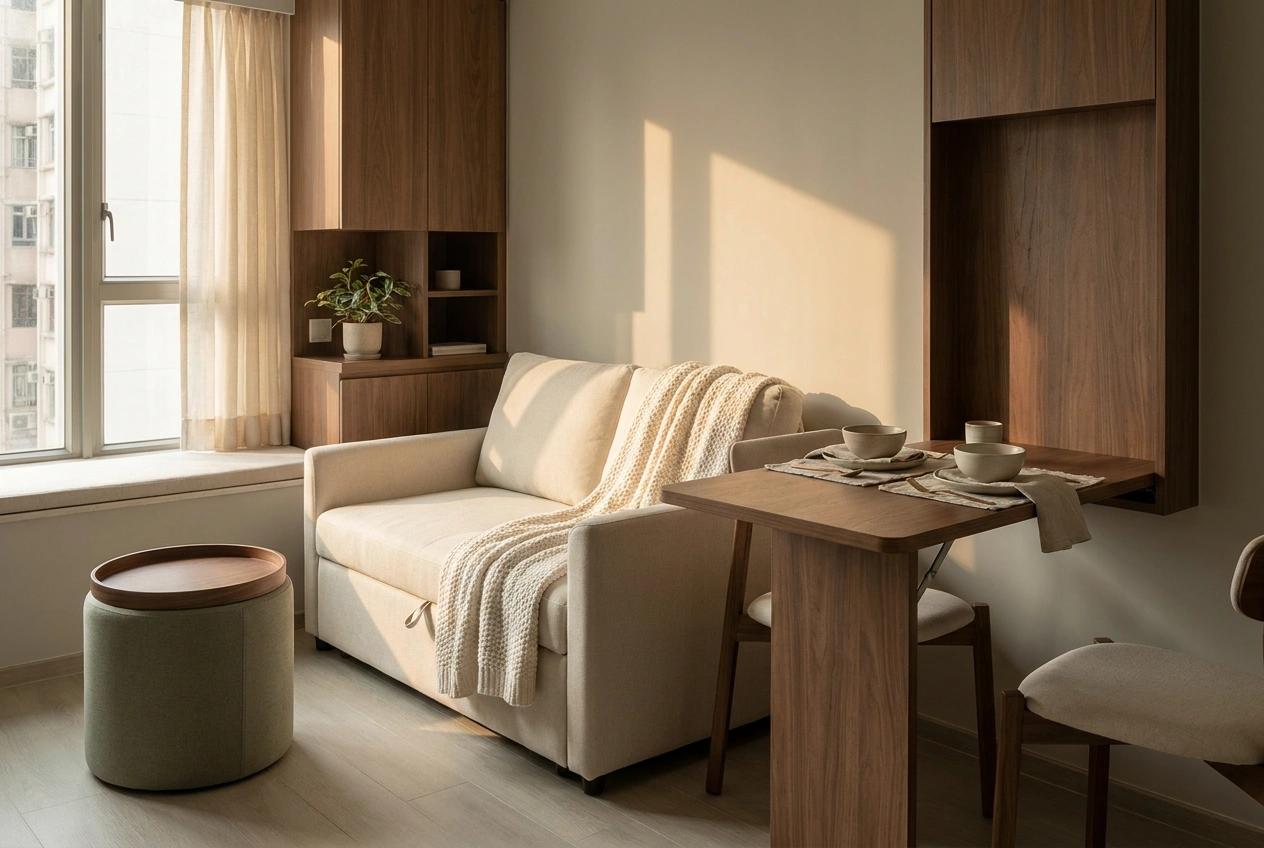
When floor area is precious, every piece should ideally do double duty. A sofa bed turns a 280 sq ft living room into a guest room; a dining table that folds or extends seats friends without dominating the space day to day; an ottoman stores blankets and seats a visitor.
The trick is to choose multifunction without overstuffing. A few well-judged pieces beat many small ones, which only fragment the space and add visual noise. In a small flat, restraint is a design tool: fewer, smarter pieces leave room to move, and room to move is exactly what makes a compact home feel generous rather than packed.
Let light and mirrors do the work
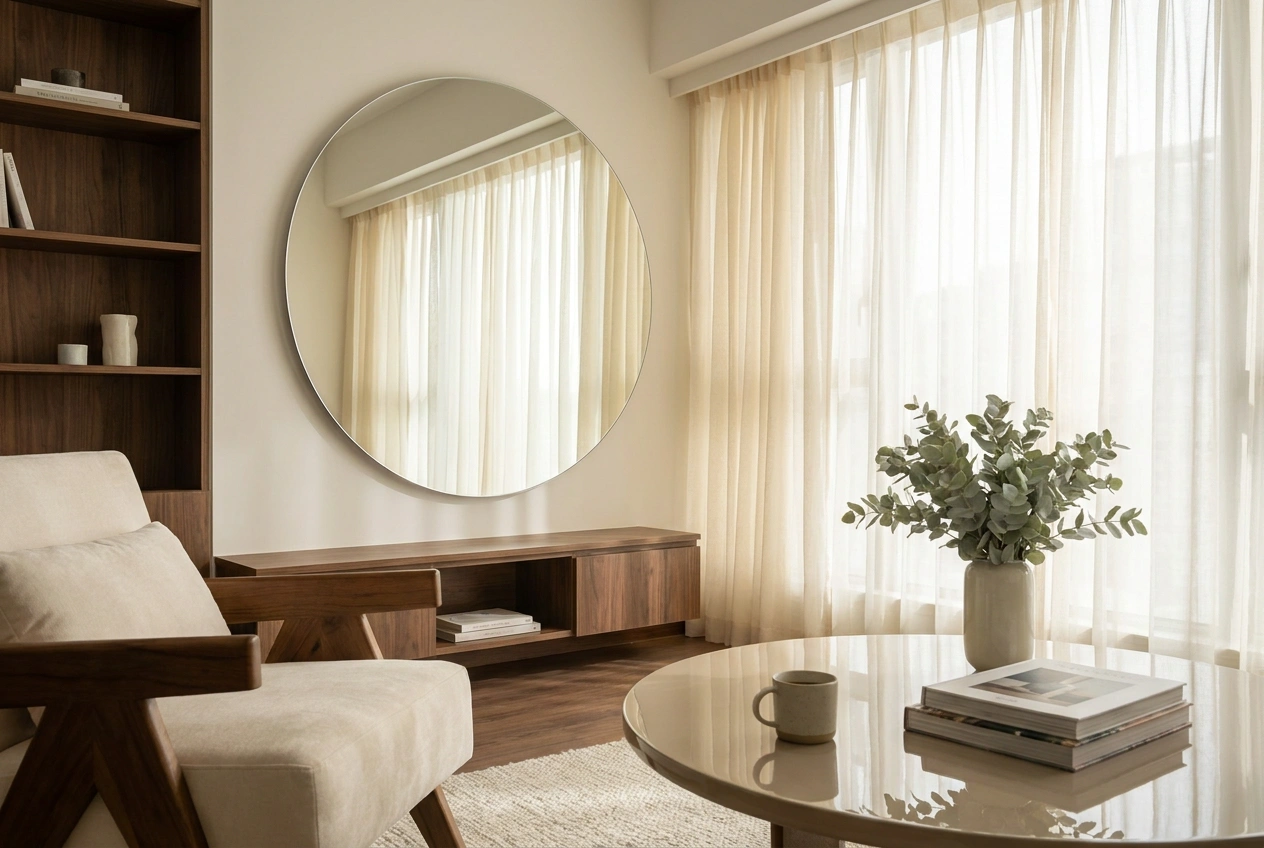
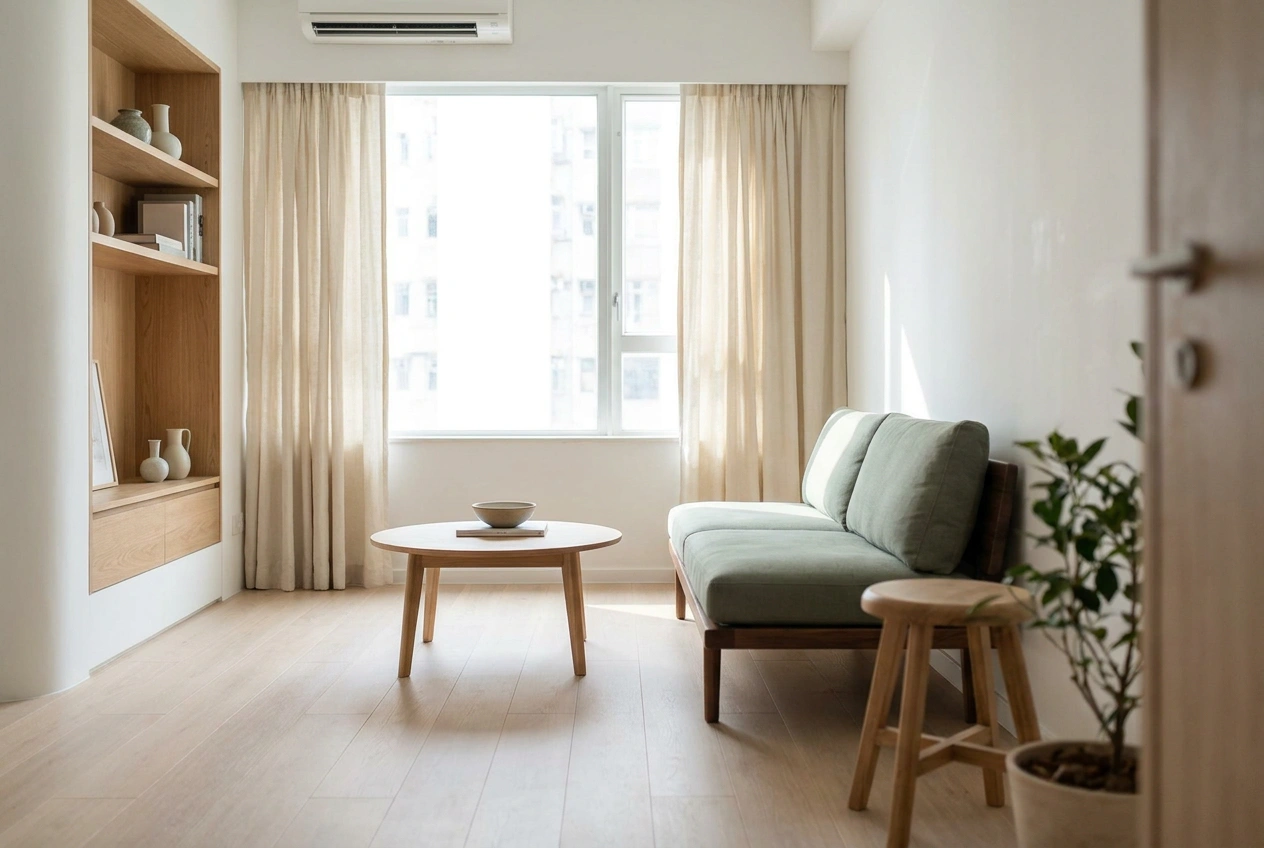
Light is the cheapest way to make a small flat feel bigger. Keep windows as unobstructed as you can, choose light, cohesive colours that bounce daylight around, and layer in lighting so the room never relies on a single harsh overhead bulb.
A well-placed mirror visually doubles a wall and reflects light deeper into the flat, and glossy or reflective surfaces add a quiet sense of depth. The goal is brightness and openness, because a flat full of light reads as larger and more welcoming. In a small home, getting the light right does more for the sense of space than almost any structural change could.
What to avoid in a small flat
A few habits quietly shrink small flats. Bulky, oversized furniture eats floor space and blocks sightlines. Too many different materials and busy patterns chop the space into fragments. Dark, heavy colours over large surfaces can close a room in, and open clutter on every surface undoes even the best storage.
Over-partitioning is another trap: too many walls in a tiny flat turn it into a warren of cramped rooms. The instinct to fit in everything you might ever need usually backfires. In small-space design, what you leave out matters as much as what you put in, and a little restraint reads as luxury.
Where a designer pays for itself
Small flats are exactly where professional design earns its keep, because the margin for error is so slim. Every centimetre counts, and the gap between a flat that feels cramped and one that feels calm often comes down to decisions you cannot easily see: the depth of a cabinet, the line of sight from the door, the height of a counter.
A designer plans these as a whole, and a design-and-build team then makes sure the made-to-measure storage and finishes are executed precisely, because in a small flat precision is everything. If you are planning a compact home, a free consultation with our team is the simplest way to see what is possible.
Open WeChat, Discover, Scan
Or save the QR and import it from your gallery.