
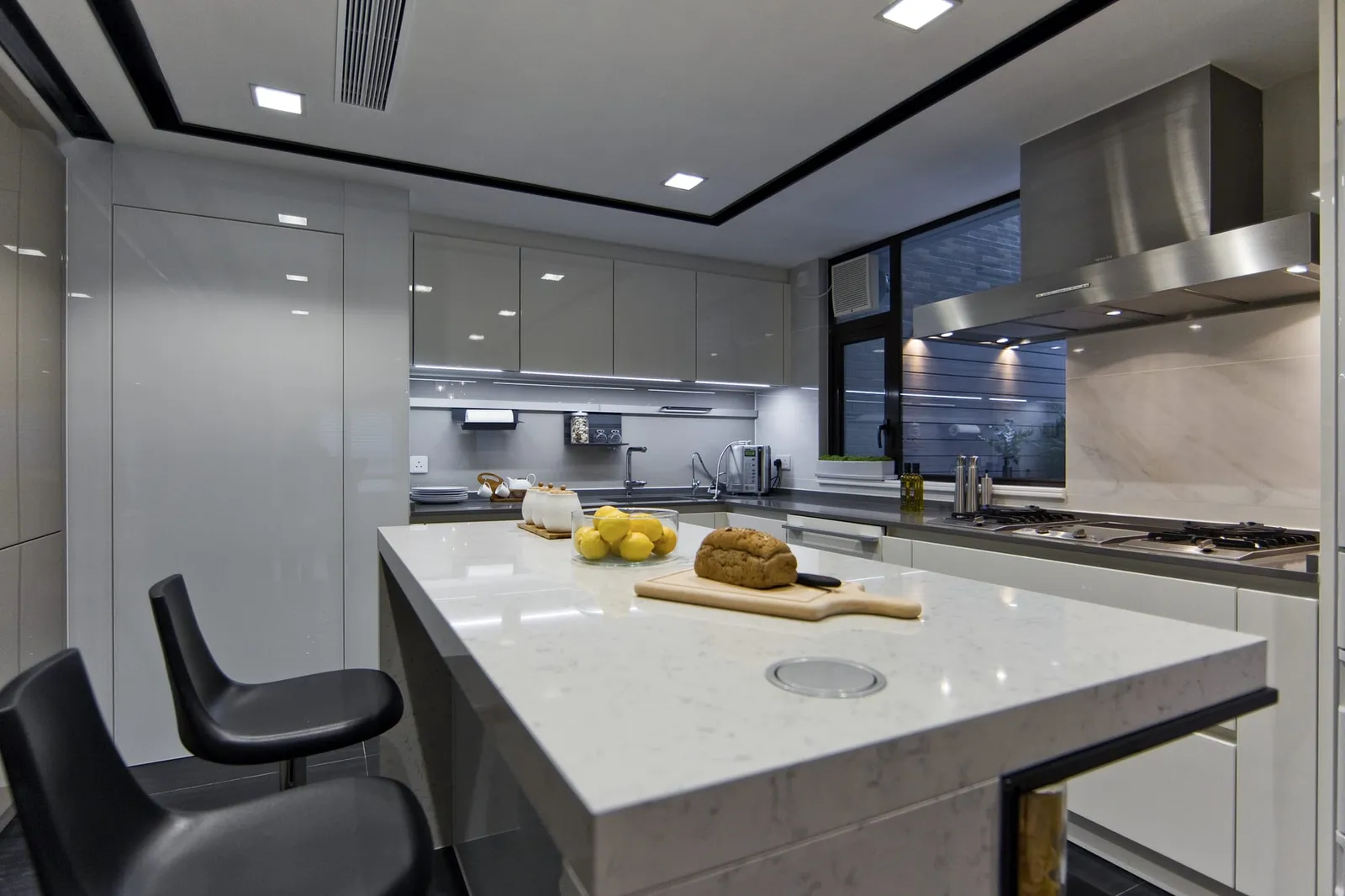
Good kitchen design in Hong Kong is a planning problem before it is a styling one. Most flats give the kitchen a tight footprint, so the layout, the flow between sink, hob and fridge, and every centimetre of storage have to be resolved before you choose a single tile. Get the bones right and even a small galley cooks beautifully; get them wrong and no finish will rescue it. This guide walks through the main kitchen layouts you will meet in Hong Kong, the work triangle that makes cooking easy, and the practical questions of worktops, storage, ventilation and whether to keep the kitchen open or closed.
The main kitchen layouts
Four layouts cover most Hong Kong kitchens, and which suits you depends on the shape and width of the room.
Single-line (一字): everything along one wall. Ideal for narrow flats and open-plan kitchens, simple and space-efficient.
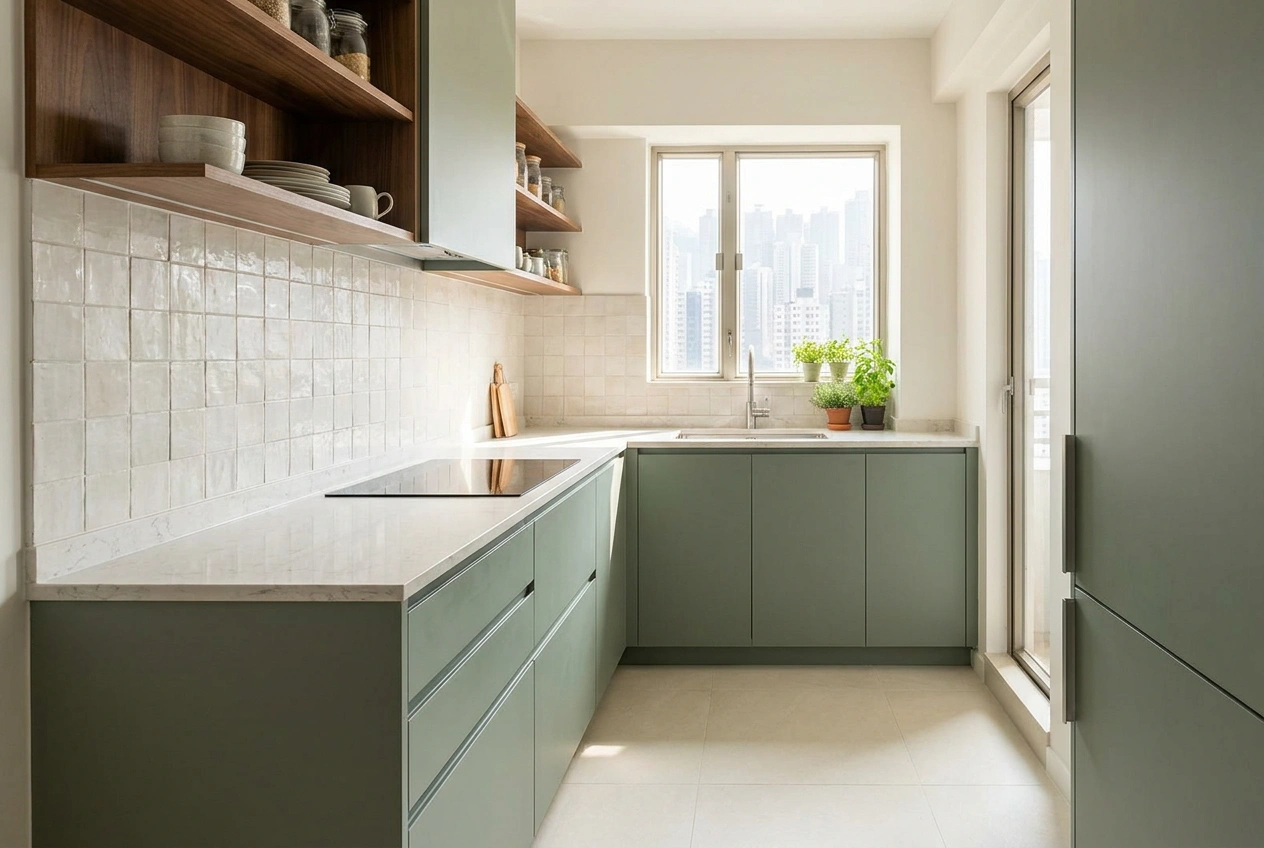
L-shaped: counters along two walls meeting at a corner. A flexible all-rounder that opens up a natural work zone.
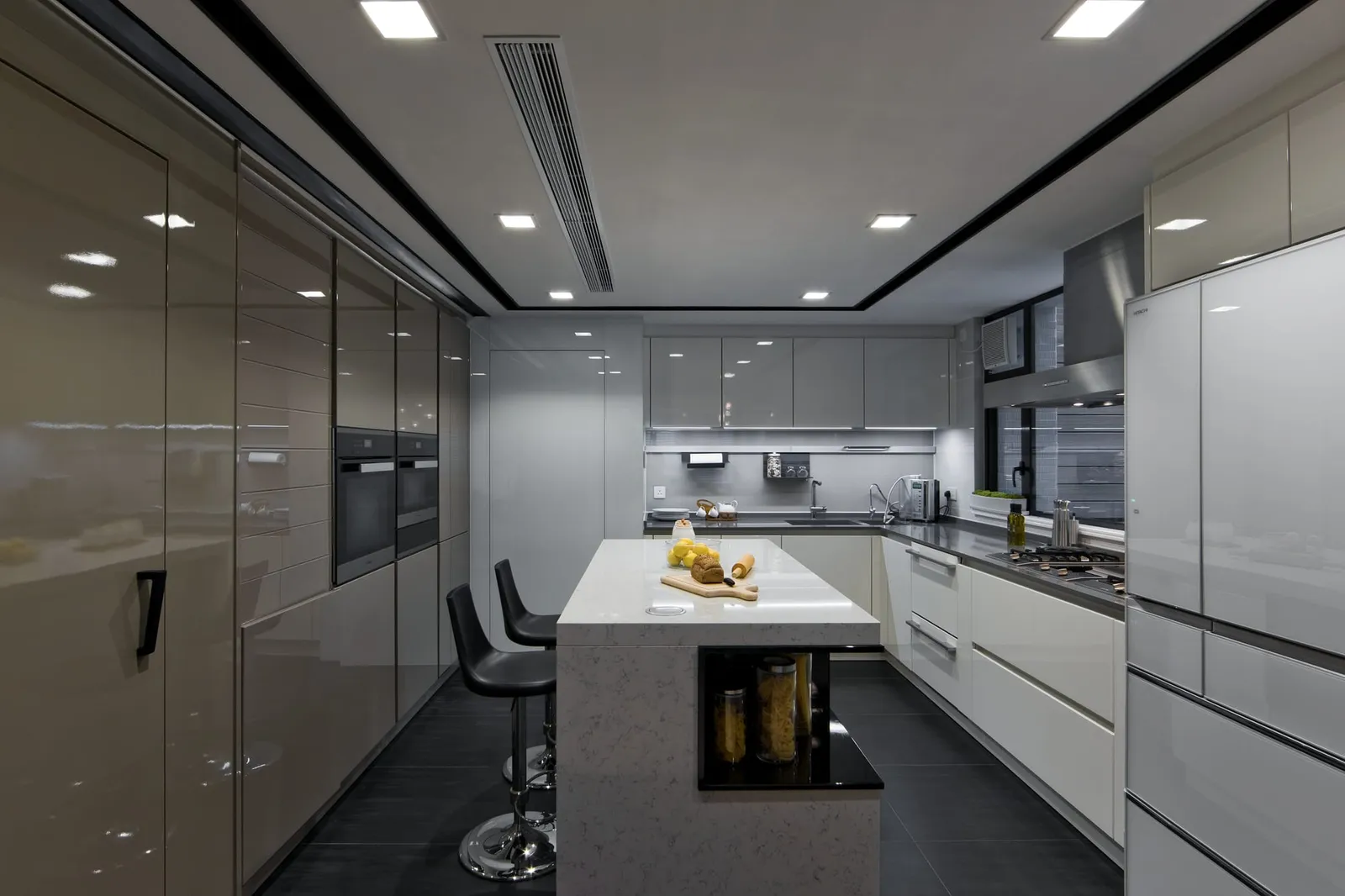
U-shaped: three walls of cabinetry. Maximum storage and worktop, best where the room can spare the width.
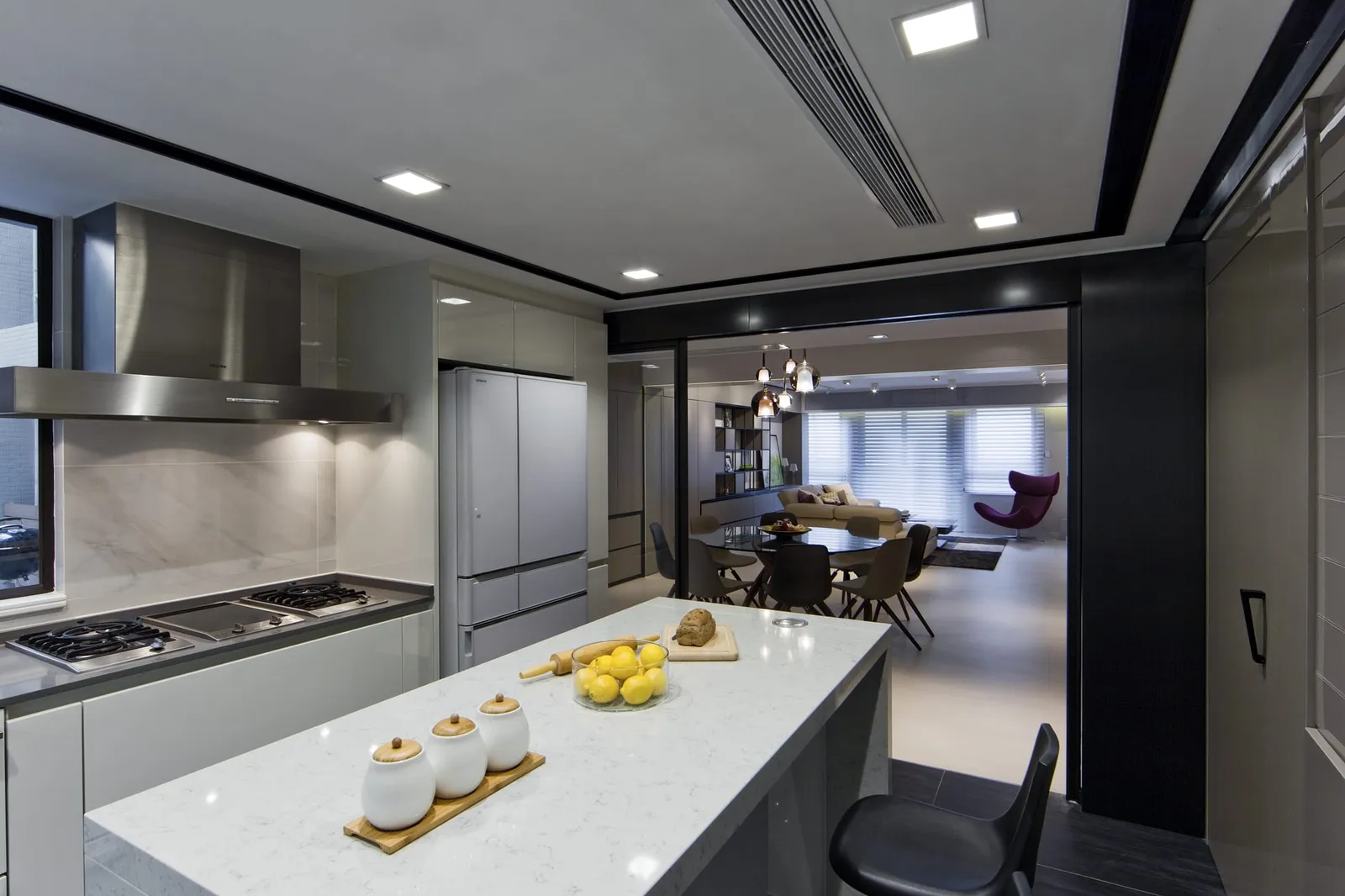
Open (開放式): the kitchen joins the living or dining area, sharing light and space.
There is no single best layout, only the one that fits your room, your cooking and how open you want the space to feel.
The work triangle: why flow matters
The work triangle links the three things you use most when cooking: the sink, the hob and the fridge. The idea is simple. Keep these three within an easy few steps of each other and cooking flows; scatter them and every meal becomes a series of awkward trips.
In a compact Hong Kong kitchen the triangle is often short, which is a quiet advantage once it is planned well. We make sure there is worktop to land things between each point, that doors and the fridge do not swing into the path, and that two people can pass without a collision. It is an old principle, but it is still the difference between a kitchen that feels effortless and one that fights you.
Storage: use every centimetre
Kitchen storage is where a small flat is won or lost, and the goal is to use full height and the corners that usually go to waste.
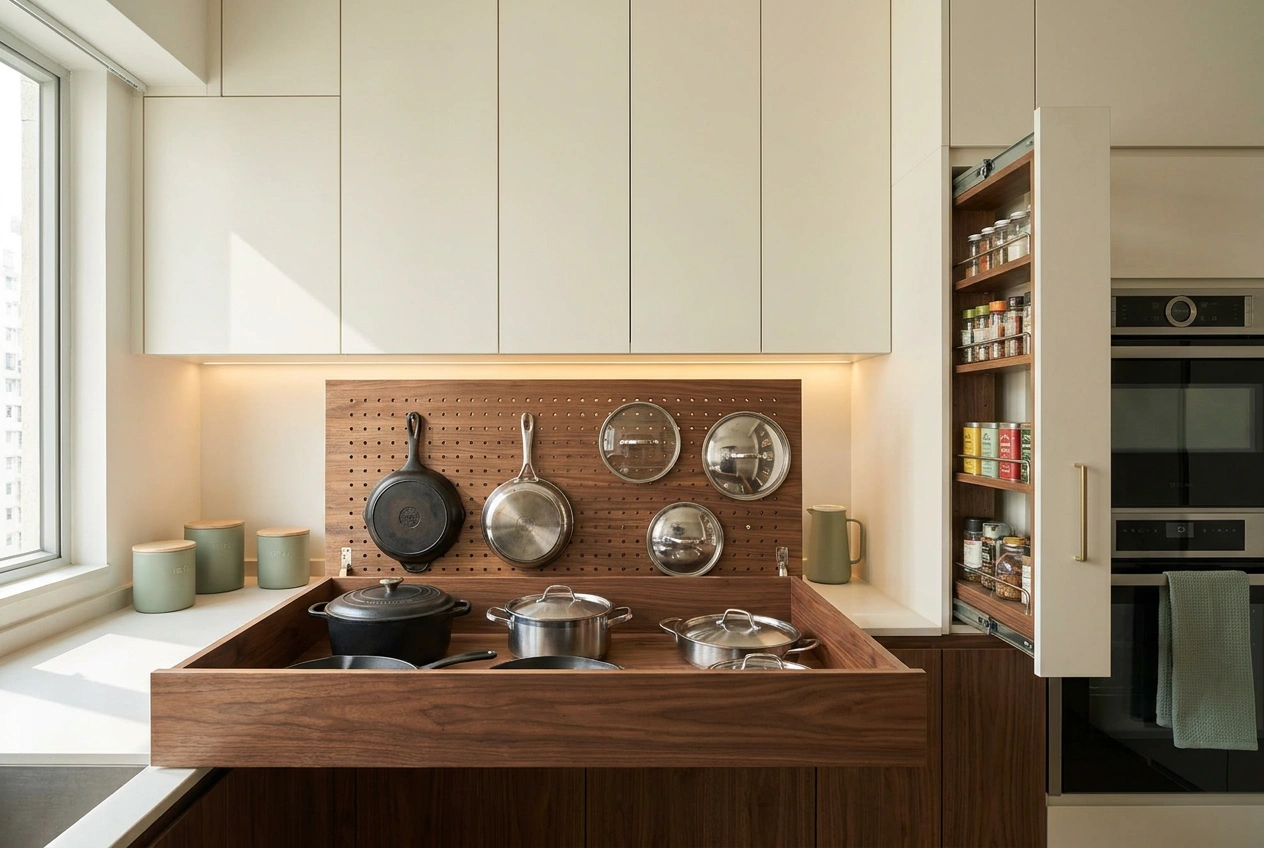
We run cabinets to the ceiling, so the top shelves hold what you reach for rarely and nothing sits gathering dust on top. Deep drawers, rather than low cupboards, bring pots and pans out to you instead of making you crouch. Corner units with pull-out fittings rescue the dead space an L or U layout creates. Slim pull-outs fill the narrow gaps beside appliances. None of this is glamorous, but in a Hong Kong kitchen, storage that genuinely fits your things is what keeps the worktop clear and the room calm.
Worktops and finishes that last
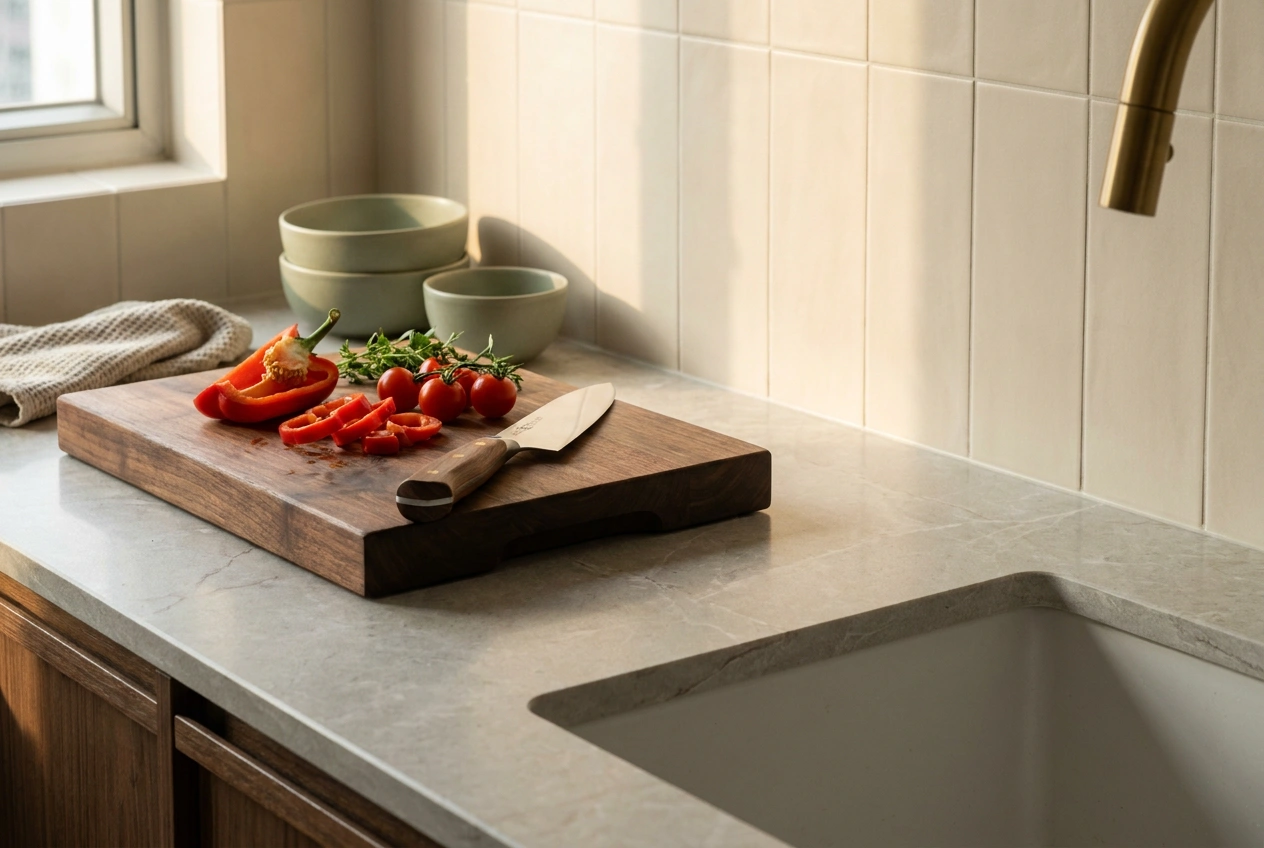
The worktop takes more daily punishment than almost any surface in the home, so it rewards choosing for durability first and looks second.
Different worktop materials trade off hardness, stain resistance, heat tolerance and upkeep, and the right choice depends on how you cook. A keen cook who sears and chops daily needs a tougher, more forgiving surface than someone who mostly reheats. The same logic applies to cabinet doors and the splashback behind the hob, where wipe-clean finishes earn their place. We talk through how you really use the kitchen, then match materials to that, so the surfaces still look good years in rather than tired after one busy season.
Ventilation and damp: the Hong Kong reality
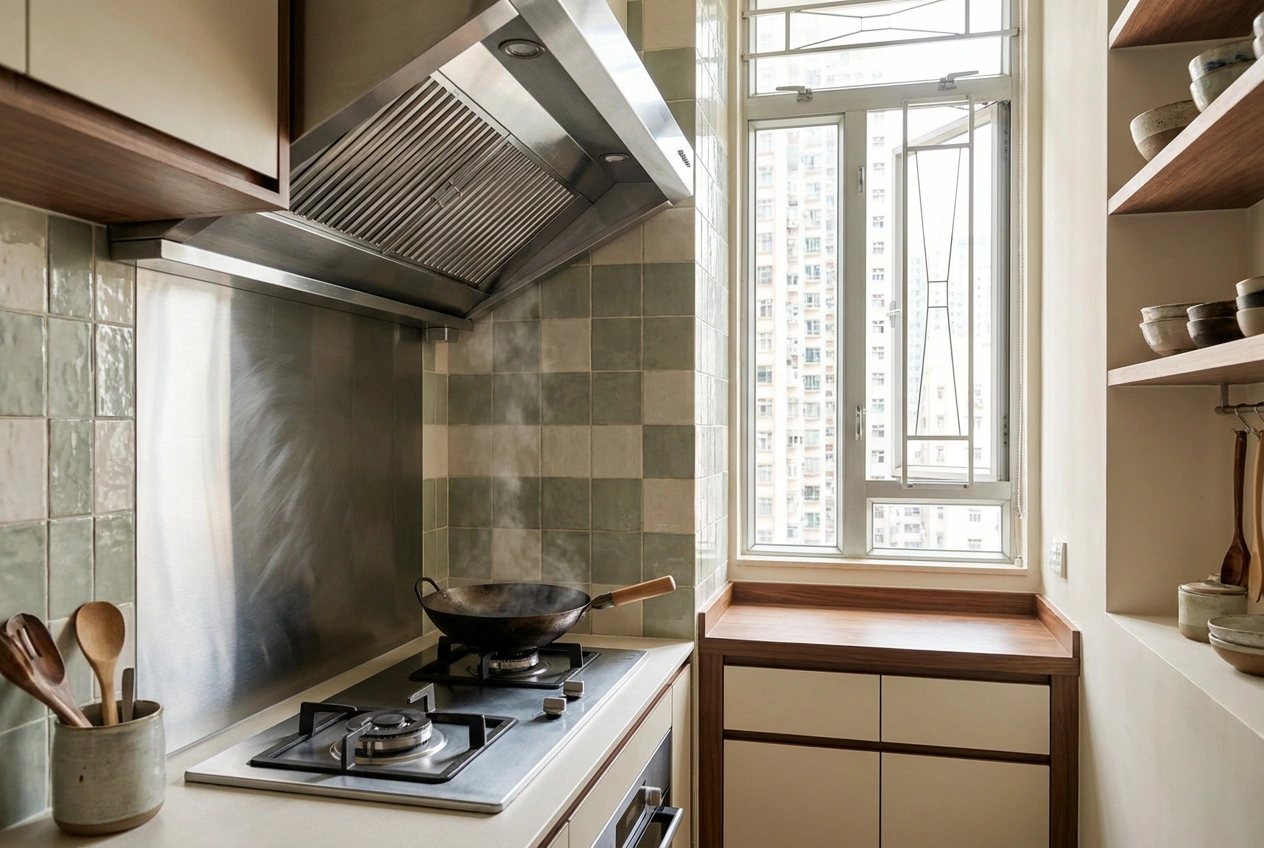
Hong Kong cooking and Hong Kong humidity make ventilation a priority, not an afterthought. Stir-frying throws off heat, grease and steam, and a kitchen that cannot clear them quickly soon shows it on every surface.
A properly sized, well-ducted extractor over the hob is the heart of it, ideally venting outside rather than just recirculating. Beyond that, moisture-resistant materials around the sink and hob, and finishes that wipe clean, keep grease and damp from taking hold. In an open kitchen this matters even more, because cooking smells travel straight into the living space. Plan the ventilation properly and the whole flat stays fresher, not just the kitchen.
Open or closed: which suits your home
Whether to open the kitchen to the living area is one of the biggest decisions, and it is about how you live, not fashion.
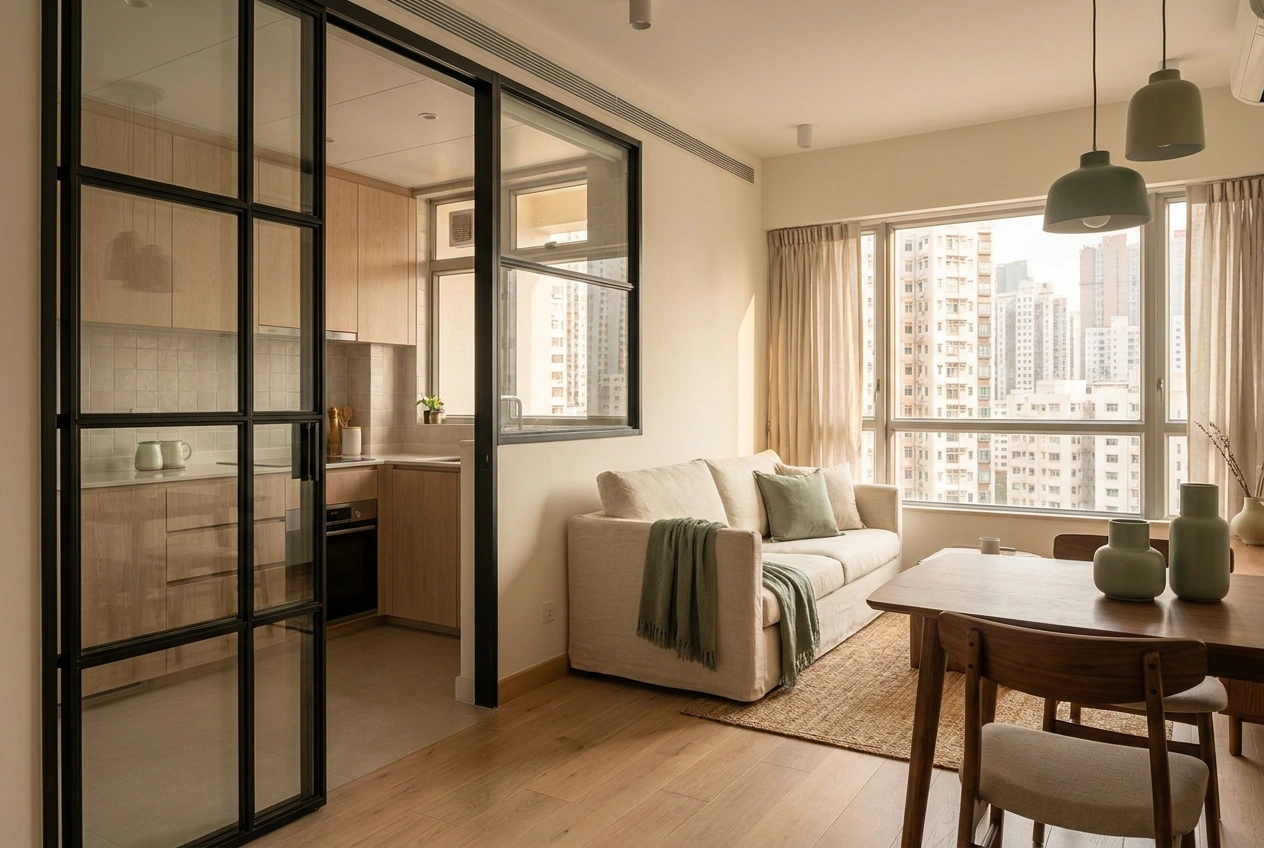
An open kitchen shares light, makes a small flat feel larger and connected, and keeps the cook part of the conversation. The trade-off is that heat, smells and noise carry, which matters if you cook heavily every day. A closed kitchen contains all of that and gives you more wall for cabinetry, at the cost of feeling more separate. There are middle paths too: a glass partition or a sliding door that opens for everyday life and closes when the wok comes out. We help you weigh it against how you actually cook, and you are welcome to talk it through with us over a free consultation.
Open WeChat, Discover, Scan
Or save the QR and import it from your gallery.