Smart Light Switches in Hong Kong: The Neutral-Wire Problem, and What to Plan in a Renovation
Smart light switches are the part of a smart home most people get wrong, and it is not their fault. A smart switch is a small always-on computer: to stay powered when the light is off, so it can be turned back on from your phone or a schedule, it needs a neutral wire. Most older Hong Kong flats wired their lighting switches with only a single live wire, so the neutral never reaches the switch box. That mismatch is why a switch that looks simple online turns into flicker, a minimum-load headache, or a panel that will not run. This guide explains what is behind your wall switch, what a no-neutral switch can and cannot do, and why the only cheap moment to fix it is during a renovation. We do not sell or install the devices. We plan the wiring so whatever switch you choose later just works.
Why a smart switch needs a neutral wire
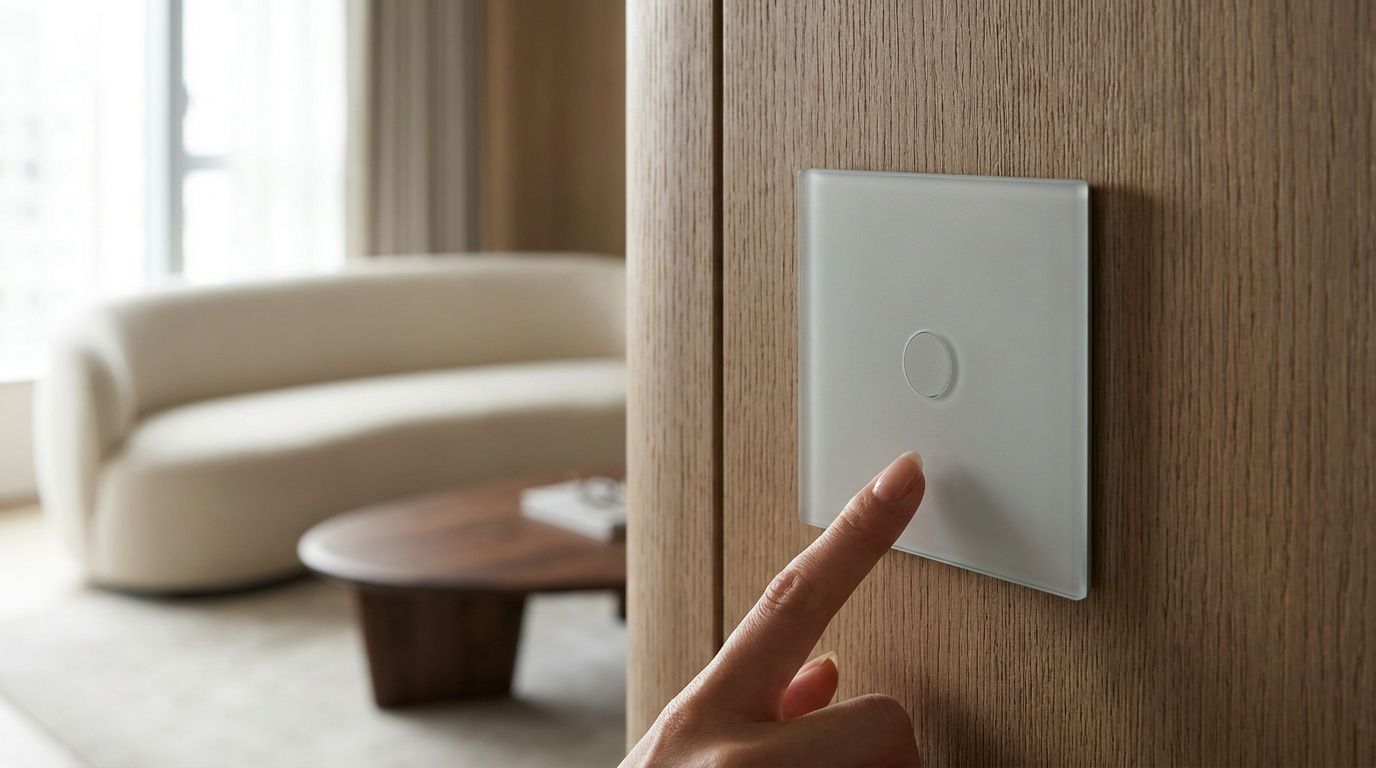
An ordinary switch simply interrupts the live wire to the lamp. When it is off, no power flows and it needs none. A smart switch is different: it has a radio, a processor and an indicator light that must stay awake even when the lamp is off, so it can respond to your phone or a schedule. That continuous power needs a return path, which is the neutral. With a neutral wired into the switch box, the electronics draw their power independently of the lamp and the switch behaves reliably. Without one, the switch has to improvise, and that is where Hong Kong flats run into trouble.
The single-live wiring in most Hong Kong flats
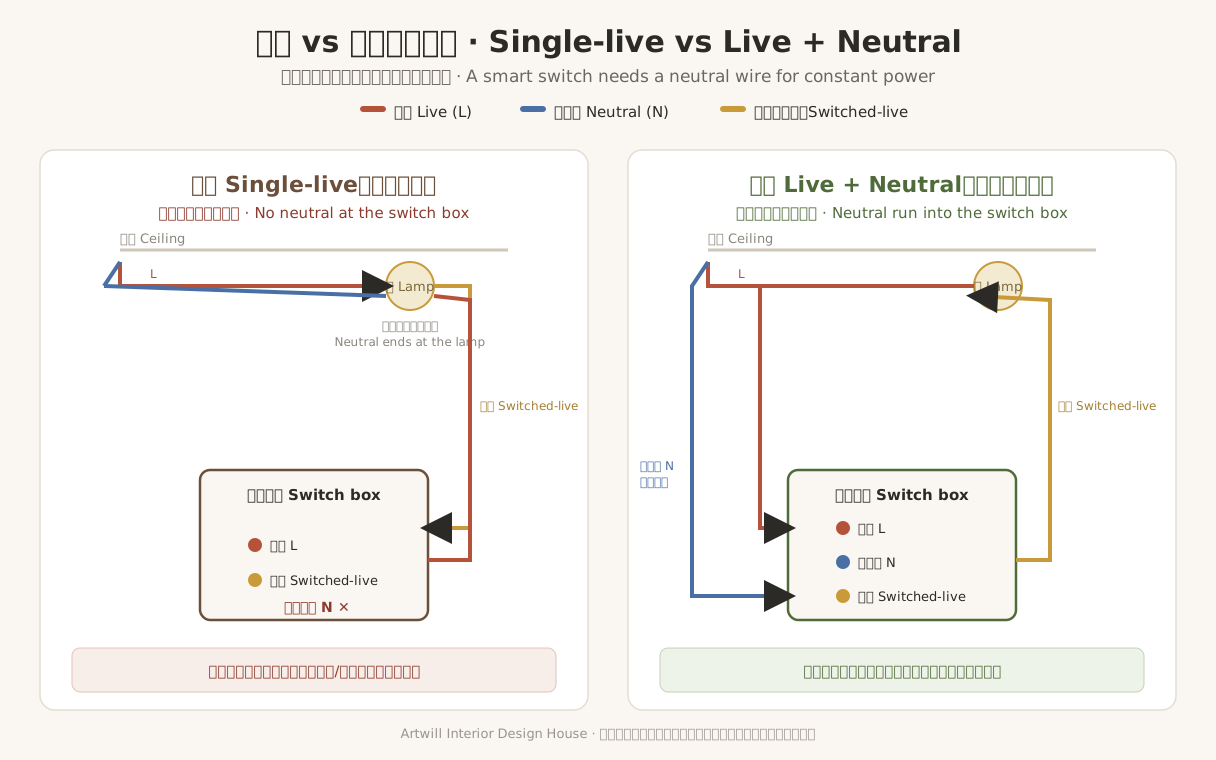
In traditional lighting wiring, mains power runs to the ceiling light fitting first. Only a switched-live loop drops down to the wall switch, and the neutral terminates at the fitting, not in the switch box. So the box behind your wall usually holds a live and a switched-live, often an earth, but no neutral. Hong Kong electricians say it plainly: new-build light switches frequently have no neutral behind them. The diagram shows the difference, and it is this difference that decides which smart switches you can actually use.
Left: the single-live switch box common in HK flats, no neutral. Right: a live-plus-neutral box, which any smart switch runs on. Running the neutral is a renovation-stage job.
What a no-neutral (single-live) smart switch cannot do
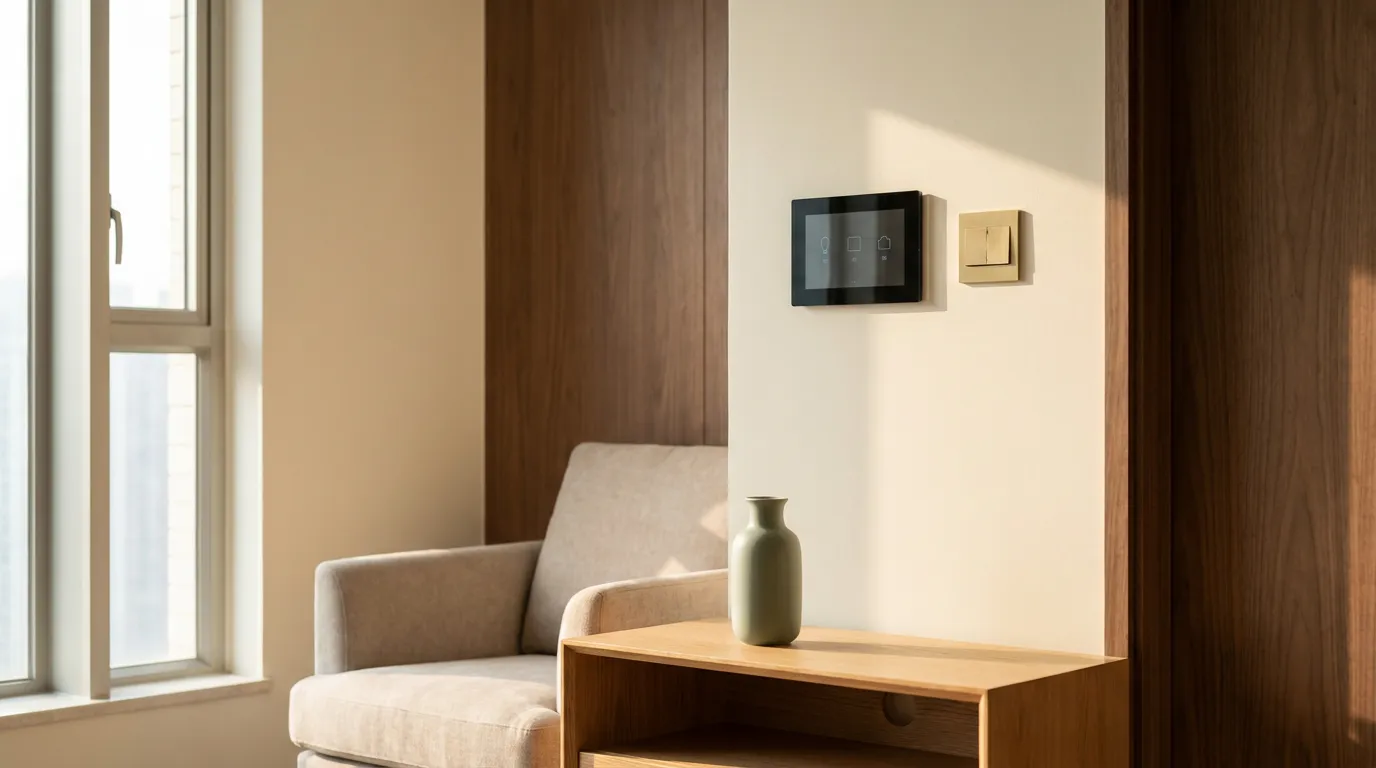
You can buy a no-neutral smart switch. It powers its electronics by trickling a tiny current through the connected lamp even when off, and that trick has real costs. It needs the lamp to draw a minimum wattage, so very low-power LEDs may not work, whereas the neutral version has no such requirement. If the lamp is below that minimum, or is a cheap LED, the trickle can make it flicker or glow faintly when off, a fault Hong Kong and Taiwan users call ghost light (鬼火). And screen or keypad panels, which need constant proper power, generally cannot run on a single live wire at all. A no-neutral switch is a workaround, not an equal.
The one cheap window to fix it: your renovation
The clean fix is simple to describe and practical at only one moment: have the electrician run a neutral wire into every lighting switch box during the first-fix wiring, so each switch position has a full live and neutral. Then any smart switch, including screen panels, works without minimum-load or flicker compromises, and you have a real choice of models.
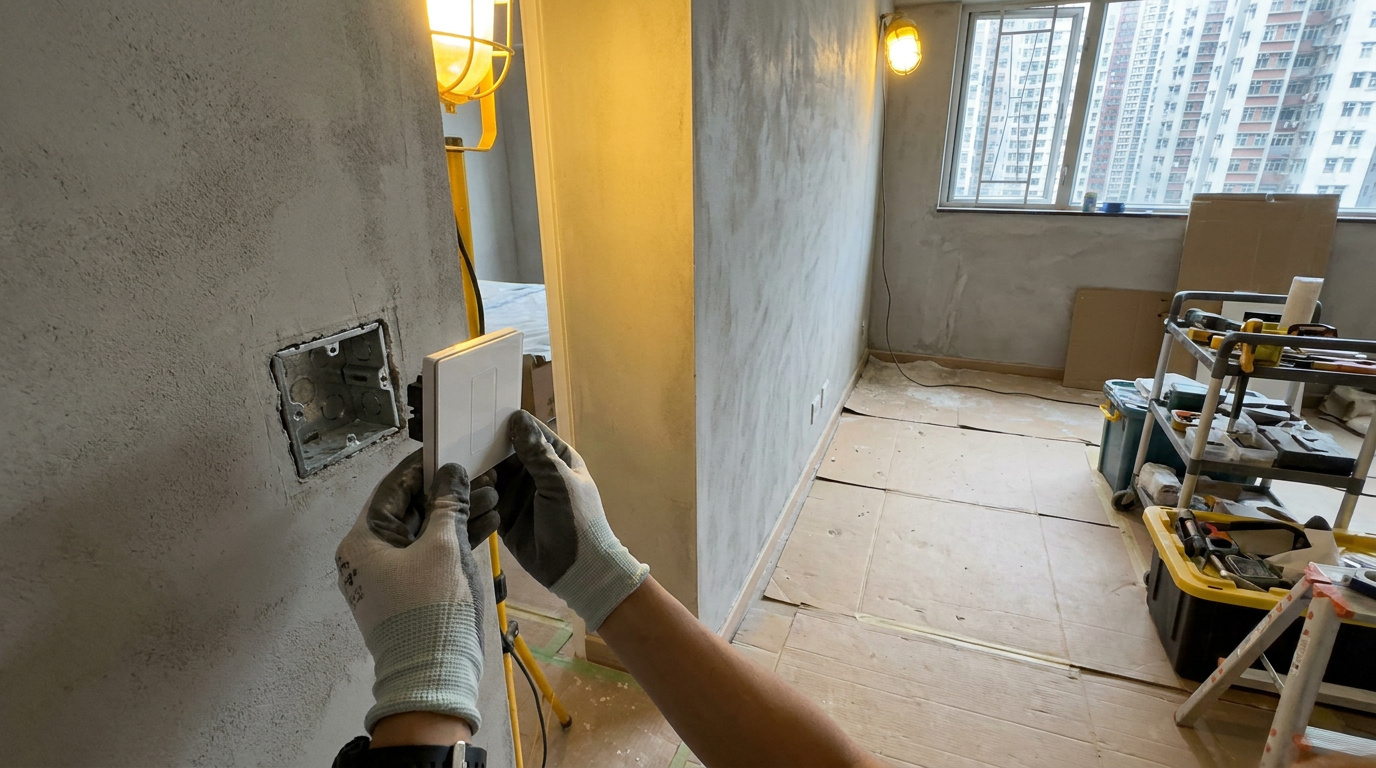
The catch is timing. This can only be done while walls and conduits are open, and even then not always everywhere. In one real Hong Kong flat, after the light positions had been moved and the walls sealed, only two switch boxes in the entire home could still be re-fed with a neutral. Move a light after plastering and, as the electrician put it, there is nothing more to be done. That is why it is a design-stage decision, coordinated with the electrician before any finish goes on. It is the same logic behind our smart-home planning guide and our residential design work.
Offering the switch plate up at first-fix, the box still open in the bare wall. This is the only stage a neutral can be run to every switch position; after the walls are sealed, as the electricians say, there is nothing more to be done.
Zigbee or Wi-Fi: what the switch talks over
Smart switches also differ in how they communicate, and it affects the plan. Wi-Fi switches join your existing router directly with no hub, which is simple for a few devices but loads the router and draws more power as you scale up. Many switches instead use Zigbee, a low-power wireless mesh that needs a small hub or gateway: mains-powered devices relay signals for their neighbours, so coverage strengthens as you add devices, and battery sensors last far longer. Neither is wrong. For a whole flat of switches, sensors and controllers, a hub-based mesh is usually the more reliable backbone, which means planning a powered, central spot for the hub, again a wiring decision, not an afterthought.
Smart sockets and bulbs: the part that needs no rewiring
Not everything needs a neutral or a renovation. Smart plugs and smart bulbs are the entry layer: a smart socket turns any lamp or appliance on and off and often meters its power, and a smart bulb brings dimming and colour to an existing fitting through the app. Neither touches your fixed wiring, so they suit renters and anyone not renovating. The trade-off is that a smart bulb is only smart while its own wall switch stays on, so it pairs poorly with a normal switch that family members flip off out of habit. That is exactly the conflict a properly wired smart switch removes, which is why, if you are renovating anyway, the switch is worth doing right.
Most do. A smart switch keeps its radio and processor powered even when the light is off, and that needs a neutral as the return path. No-neutral models exist but trickle current through the lamp instead, which brings minimum-load limits and flicker risk, and usually cannot run screen or keypad panels.
Why do Hong Kong flats often have no neutral at the switch?+
Traditional lighting wiring sends mains power to the ceiling fitting first, and only a switched-live loop drops to the wall switch, so the neutral ends at the light, not in the switch box. Many older HK flats are wired this way, which is why a lot of smart switches do not simply work out of the box.
Can I add a neutral wire without a full renovation?+
Rarely cleanly. Running a neutral into switch boxes needs the walls and conduits open, so it is a first-fix wiring job during a renovation. After finishes go on, only a few positions can usually be re-fed, and moved light positions often cannot be done at all, which is why it is planned at the design stage.
What is a no-neutral smart switch, and is it good enough?+
It is a smart switch designed to work with only a live wire, by passing a small current through the lamp. It can be fine for a single fitting with a compatible bulb, but it carries minimum-load limits, a risk of flicker or ghost glow, and generally cannot power screen panels. If you are renovating, running a neutral is the better answer.
Do smart plugs and bulbs need special wiring?+
No. Smart plugs and bulbs work in existing sockets and fittings with no rewiring, so they suit renters and non-renovators. The limit is that a smart bulb only responds while its wall switch stays on, so for a permanent, everyone-can-use setup, a properly wired smart switch is better.
Planning a renovation?
Smart-home provisions are design-stage decisions. Free first consultation; we fold the wiring, switch positions and layout into your whole-home renovation plan.

Open WeChat, Discover, Scan
Or save the QR and import it from your gallery.