
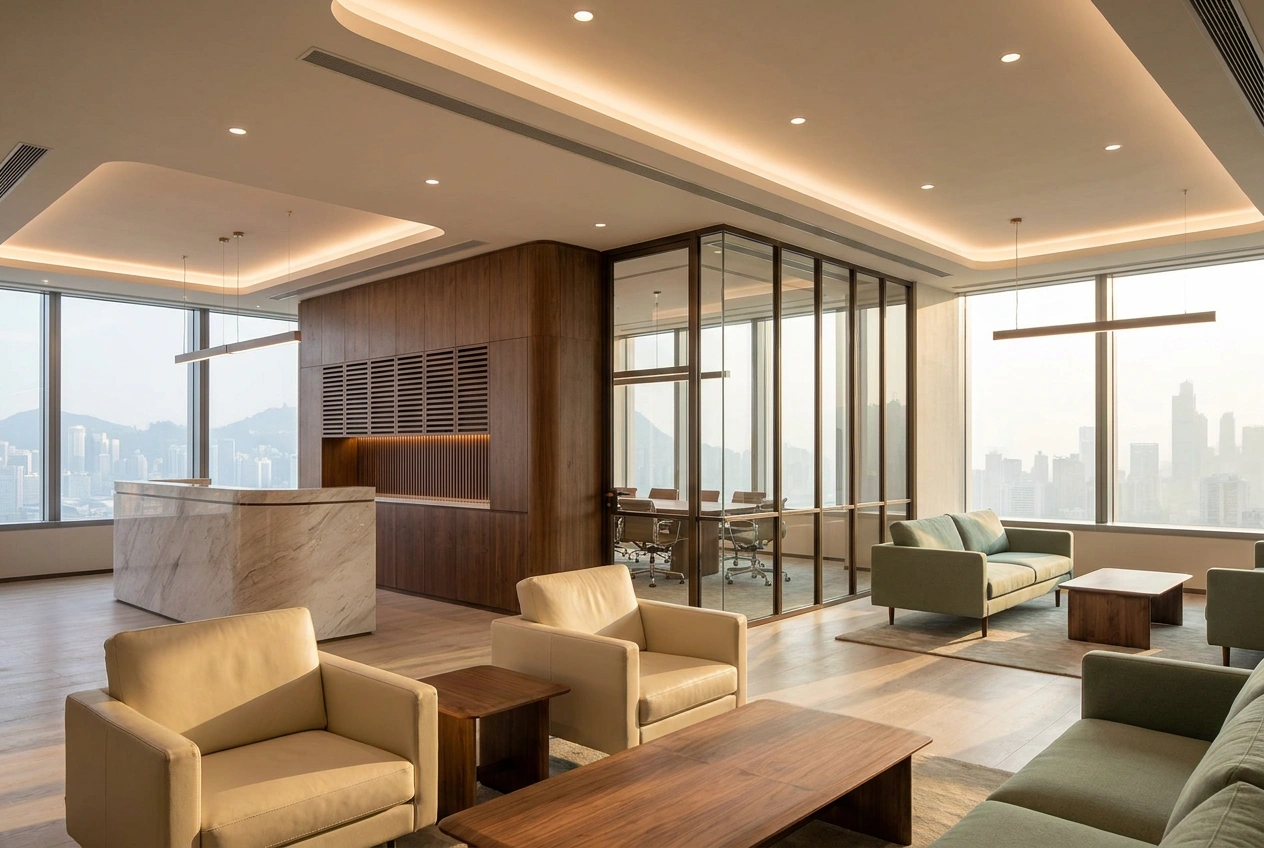
Office renovation in Hong Kong is not a bigger version of a home renovation. The commercial layer adds a landlord, a lease clock, and three statutory bodies, and any one of them can quietly add weeks if it is handled late. The good news is that an office fit-out is also more predictable than a flat renovation once you understand the moving parts. This guide walks through who builds what (Cat A versus Cat B), the approvals that have to run in parallel, the real process and timeline, how the quote is built, and how to read it so you do not get caught. Artwill runs all of it under one contract, from brief to handover, across more than 200 Hong Kong office projects.
Cat A and Cat B: who builds what
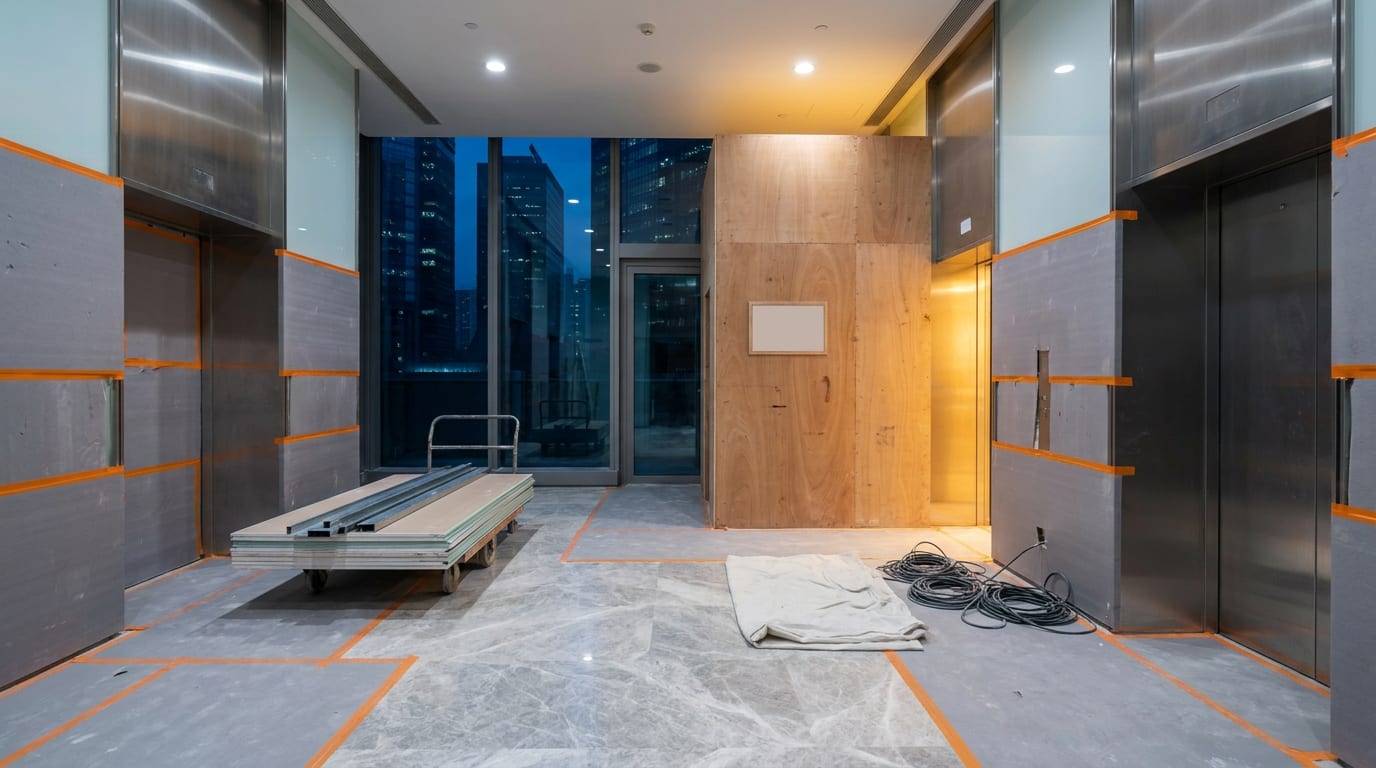
The first number that shapes your budget is not a price, it is the handover standard. In a Hong Kong commercial lease, the landlord delivers Category A: the base ceiling, main air-conditioning, the fire sprinkler network, washrooms, and lift-lobby finishes. The tenant builds Category B: partitions, workstations, meeting rooms, branded reception, carpet, office furniture, and AV.
So before anything else, confirm in writing what the landlord's Cat A actually includes. "Shell" and "Cat A finished" are very different starting points, and the gap between them lands squarely in your fit-out scope and budget. This is a lease-negotiation question, not a design question, and it pays to ask it early. Our office interior design and fit-out service starts here, mapping the Cat A handover against your brief before a single line is drawn.
The statutory approvals you cannot skip
Three Hong Kong authorities sit behind almost every office fit-out, and submissions to them run in the background while design continues:
- Buildings Department (BD): partition and layout works are usually handled under the Minor Works Control System; larger or structural changes need General Building Plans and an Authorized Person.
- Fire Services Department (FSD): fire-safety provisions need FSD approval and, on completion, an F.S.251 certificate, covering means of escape, sprinkler and detection changes, and exit signage.
- EMSD: any new wiring or electrical change is certified by a registered electrical worker under Form WR1; a periodic WR2 safety recheck is required afterwards on its own schedule.
The office fit-out process, step by step
A clean office project moves through six stages, with approvals overlapping the early ones:
- Brief and measure: headcount, departments, meeting-room ratio, the Cat A handover survey.
- Design development: space plan, finishes, M&E coordination, with statutory submissions launched in parallel.
- Approvals in flight: BD, FSD and EMSD submissions progress while drawings are finalised.
- Build: demolition through ceiling and floor finishes, all sub-trades supervised on site.
- Snagging: defect list closed before handover, not after move-in.
- Handover: as-built set, warranty terms, and FF&E in place.
How long an office fit-out takes
A typical 5,000 square-foot Grade-A Cat B project runs about twelve to sixteen weeks from brief to handover: two to three weeks of brief and concept, four to seven weeks of design development with statutory submissions in parallel, six to eight weeks of build, and one to two weeks of snagging and move-in.
Smaller offices of 1,000 to 2,000 square feet without complex submissions can compress to eight to ten weeks. The hard constraint is usually BD: because approval can take six to ten weeks, an early submission is what protects your move-in date. If you are trying to complete within a landlord's rent-free fitting-out period, work backwards from that deadline and submit on day one.
How office renovation is quoted, and how to read the quote
Office fit-out cost is driven by scope, not by a single rate. The levers that move a quote are the finish level, the density of partitions and meeting rooms, the M&E scope (air-conditioning zoning, added power, sprinkler and detection changes), AV and IT infrastructure, programme urgency, and how complex the statutory submissions are.
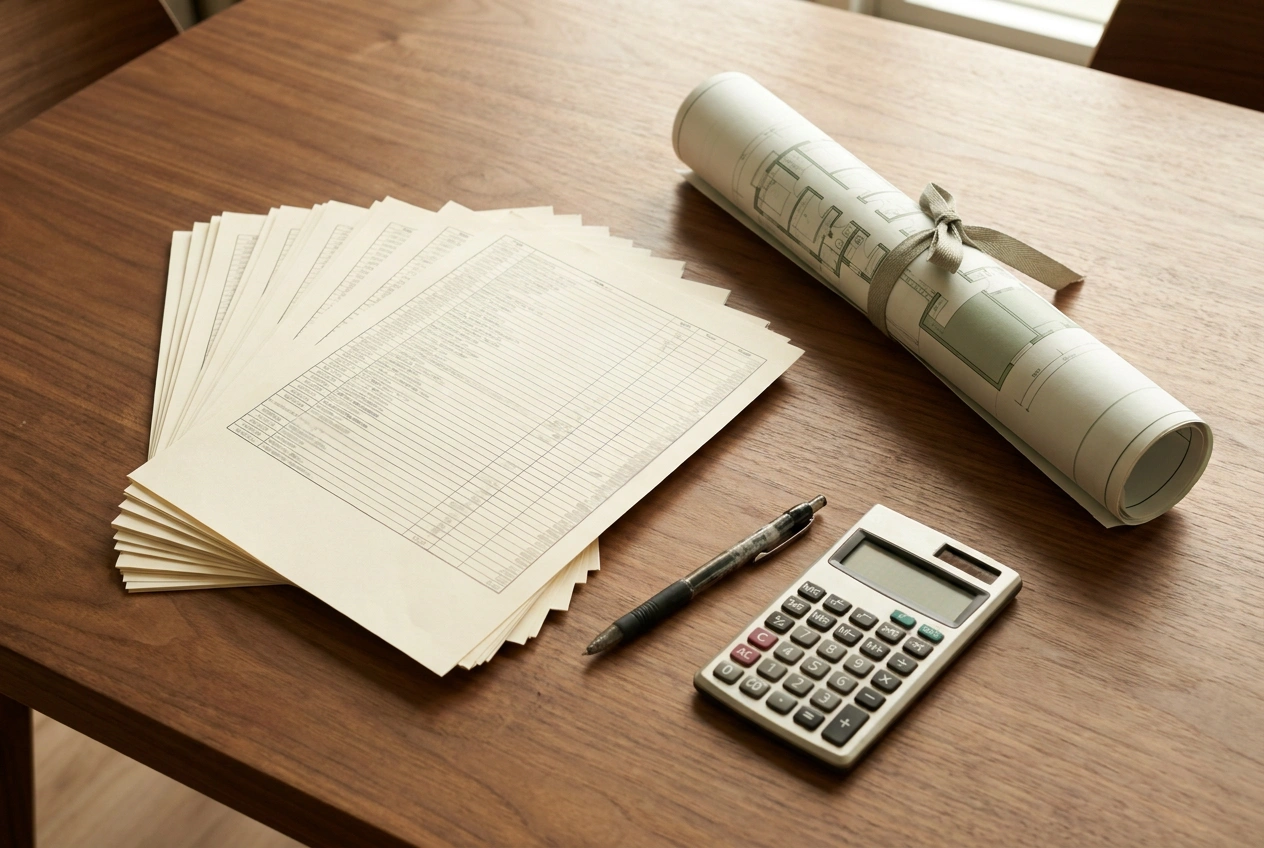
When you read a quotation, the protection is itemisation. A real quote lists each element so you can see what is included and what is provisional; a suspiciously round lump sum is where mid-project add-ons hide. Confirm who carries the M&E alterations, whether the figure assumes a "shell" or "Cat A finished" handover, and what is excluded. Our guide on how to read a renovation quotation and on avoiding renovation scams applies directly to commercial work.
Small-office fit-outs: the trade-offs
A small office, roughly 1,000 to 2,000 square feet, is not just a scaled-down version of a large one. With less floor plate, every decision is a trade-off: an enclosed meeting room versus an open collaboration zone, a full pantry versus a tea point, a reception statement versus more desks.
The wins in a small office come from dual-purpose joinery, glass partitions that keep light and sightlines, and a layout that reserves the one or two enclosed rooms for what genuinely needs privacy. Because the statutory scope is usually lighter, small offices also move faster, which suits a tight rent-free window.
Choosing a contractor: the checklist
The contractor decision is where an office project is won or lost. Before you sign:
- Confirm the team handles BD, FSD and EMSD submissions in-house or through a named consultant, not as your problem.
- Ask for an itemised quote and a programme that shows approvals running in parallel.
- Check who supervises the sub-trades on site day to day.
- Confirm the workmanship warranty and what it covers versus the manufacturer warranty on procured products.
- Clarify noise-window scheduling: commercial buildings restrict heavy work to set hours, which affects the programme.

Open WeChat, Discover, Scan
Or save the QR and import it from your gallery.